Comparing Beam Distance, Lumens & Brightness – What’s Real vs. Marketing Hype
If you’ve ever shopped for a flashlight, you’ve probably noticed bold claims like “90,000 lumens” or “beam distance of 10 kilometres.” While these numbers may sound impressive, they’re often misleading. Flashlight specifications can be confusing, and marketing hype sometimes overshadows what really matters.
In this guide, we’ll break down beam distance, lumens, and brightness — what they actually mean, how to interpret them, and how to separate real performance from exaggerated advertising.
1. Lumens – The Measure of Total Light Output
What lumens really mean:
- Lumens measure the total amount of light a flashlight produces.
- More lumens doesn’t always mean “better.” A 10,000-lumen flashlight can be too bright for close-up work and drain the battery quickly.
Marketing hype:
- Many cheap, no-name brands exaggerate lumen ratings to attract buyers. A torch claiming “90,000 lumens” for under R500 is almost certainly overstated.
- Professional-grade flashlights usually provide realistic lumen ranges (e.g., 500–2,000 lumens), balanced with runtime and efficiency.
What to look for:
- Match lumens to your use case.
- 200–500 lumens: home, camping, walking at night.
- 1,000–2,000 lumens: hiking, hunting, and patrols.
- 3,000+ lumens: professional, tactical, or search-and-rescue use.
2. Beam Distance – How Far the Light Travels
What beam distance means:
- Beam distance is the maximum range at which a flashlight can still provide usable light.
- It’s influenced by reflector design, LED type, and lens quality, not just lumens.
Marketing hype:
- Claims of beams reaching “10 kilometres” are unrealistic. Even the most advanced searchlights top out at a few kilometres under ideal conditions.
- Realistic consumer flashlights typically reach 100–500 metres.
What to look for:
- For hiking: 100–200 metres is sufficient.
- For hunting or farm patrols: 300–500 metres is ideal.
- For professional security or rescue: specialised lights can reach beyond 1 kilometre.
3. Brightness vs. Usability
Brightness is about balance, not just numbers.
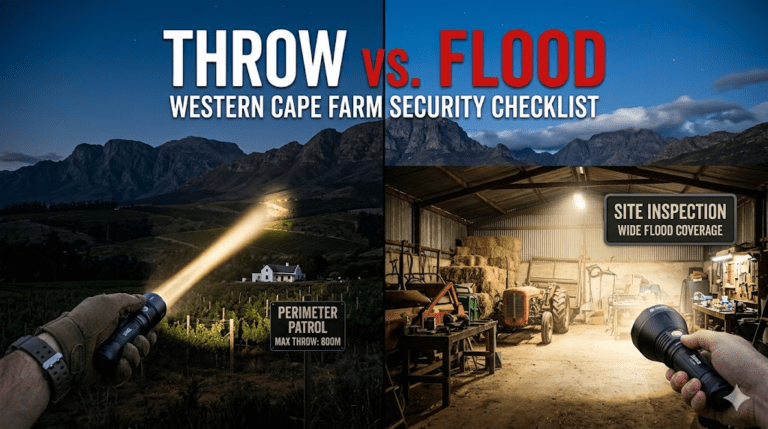
- A flood beam spreads light over a wide area — useful for camping or patrols.
- A spot beam concentrates light far into the distance — better for hunting or search tasks.
- Many modern flashlights let you switch between modes for flexibility.
The trap:
- A torch with high lumens but poor beam focus may feel bright up close but useless at long range.
- Conversely, a long-throw spotlight might not help much when you’re setting up camp or fixing equipment at arm’s length.
4. Standards You Can Trust – ANSI FL1
To cut through the hype, look for ANSI FL1 standards. This is an international testing system that measures:
- Light Output (lumens)
- Beam Distance (metres)
- Peak Beam Intensity (candela)
- Runtime (hours)
- Impact Resistance (metres drop-tested)
- Water Resistance (IP ratings)
Reputable brands publish ANSI FL1 data, giving you numbers you can trust. Suspiciously high specs without ANSI backing are usually marketing tricks.
5. South African Context – What You Really Need
South Africa’s unique conditions — from load shedding to farm patrols and outdoor adventures — demand reliable performance over inflated numbers. Consider:
- For everyday home and urban use, a 500–1,000 lumen flashlight with 100m beam distance is more than enough.
- For farm security and hunting, go for 1,500–2,500 lumens with 300–500m throw.
- For professional tactical or rescue work, invest in high-output, ANSI-rated flashlights with proven durability.
Conclusion
When comparing flashlights, don’t be swayed by inflated numbers and unrealistic claims. Lumens, beam distance, and brightness all matter — but only when understood in context.
The right flashlight balances brightness, runtime, and beam pattern for your needs. Trusted brands back their claims with ANSI testing, while “too good to be true” numbers often are.
👉 Explore our range of LED Flashlights built for South Africa’s real-world conditions — with performance you can trust, not marketing hype.