Safety Tips for Using Flashlights at Night: Hiking, Hunting & Patrols
For many South Africans, a reliable flashlight is more than just a tool — it’s a lifeline. Whether you’re hiking in the Drakensberg, tracking game on a farm, or conducting night patrols for security, the right lighting can make all the difference. Beyond simply seeing in the dark, a flashlight plays a vital role in safety, awareness, and preparedness.
In this guide, we’ll share essential safety tips for using flashlights at night, helping outdoor enthusiasts, hunters, and security personnel stay safe and effective in low-light conditions.
1. Choose the Right Flashlight for the Job
Not all flashlights are created equal. Your needs should dictate your choice:
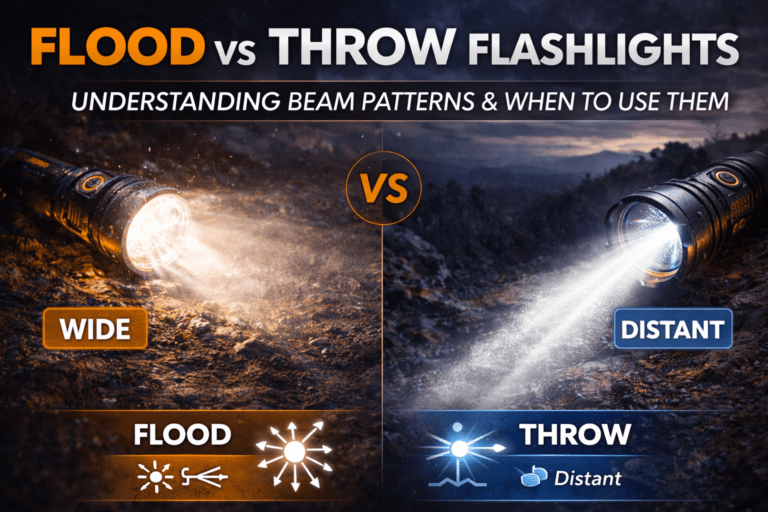
- Hiking: Look for lightweight, rechargeable LED flashlights with a wide beam for navigating trails. An IP65 or higher rating is recommended to withstand dust and rain.
- Hunting: Opt for flashlights with adjustable brightness and red/green light filters to avoid spooking animals. Long beam throw is a key advantage.
- Patrols & Security: Choose durable, tactical-style flashlights with strobe functions to disorient intruders and long battery life for extended shifts.
👉 Explore our LED Flashlights built to handle South Africa’s demanding outdoor conditions.
2. Mind Your Battery Life
A flashlight is only useful if it stays on when you need it most.
- Recharge before use: Always start your hike, patrol, or hunt with a full charge.
- Carry spares: If using disposables, bring extra AA or AAA batteries.
- Backup option: For critical tasks, keep a secondary flashlight or a compact headlamp as a fail-safe.
3. Use the Right Beam Mode
Modern LED flashlights offer multiple modes — use them wisely:
- Low Mode: Conserves battery and preserves night vision.
- Medium Mode: Best for general navigation and outdoor tasks.
- High Mode: Use when scanning a wide area or spotting potential threats.
- Strobe/SOS: Emergency use only, effective for signalling or self-defence.
4. Position Your Light Smartly
How you use your flashlight matters:
- Hold at an angle: Avoid shining directly in front of your face to reduce glare.
- Scan in arcs: Sweep your beam side to side to pick up movement.
- Don’t blind others: In a group, aim the beam downward when talking to avoid dazzling companions.
5. Stay Visible & Aware
Carrying a flashlight improves your visibility to others:
- Hikers: Flash your beam occasionally to alert others of your position on shared trails.
- Hunters: Signal your presence to partners to avoid accidents.
- Security patrols: Use your beam to check blind spots, doorways, and fence lines — always before approaching.
6. Respect Wildlife & Neighbours
- Hunting: Avoid unnecessary high-beam use to prevent disturbing game.
- Farms & Patrols: Keep light beams focused and avoid flashing directly into homes or vehicles.
- Hiking: Switch to low power or a filtered mode when passing campsites to avoid disturbing fellow hikers.
7. Safety Beyond the Flashlight
A good torch improves safety, but don’t forget the basics:
- Tell someone your route before hiking or hunting at night.
- Carry a whistle, power bank, and first-aid kit.
- Stay alert — a flashlight helps you see, but situational awareness keeps you safe.
Conclusion
A flashlight at night is more than a convenience — it’s an essential safety tool. By choosing the right model, managing battery life, and using smart techniques, you can stay safe and confident whether you’re exploring trails, hunting game, or protecting property.
👉 Upgrade to a dependable LED Flashlight designed for South Africa’s rugged conditions — and never be left in the dark.