Rechargeable vs Battery-Powered Flashlights: Which One Should You Choose?
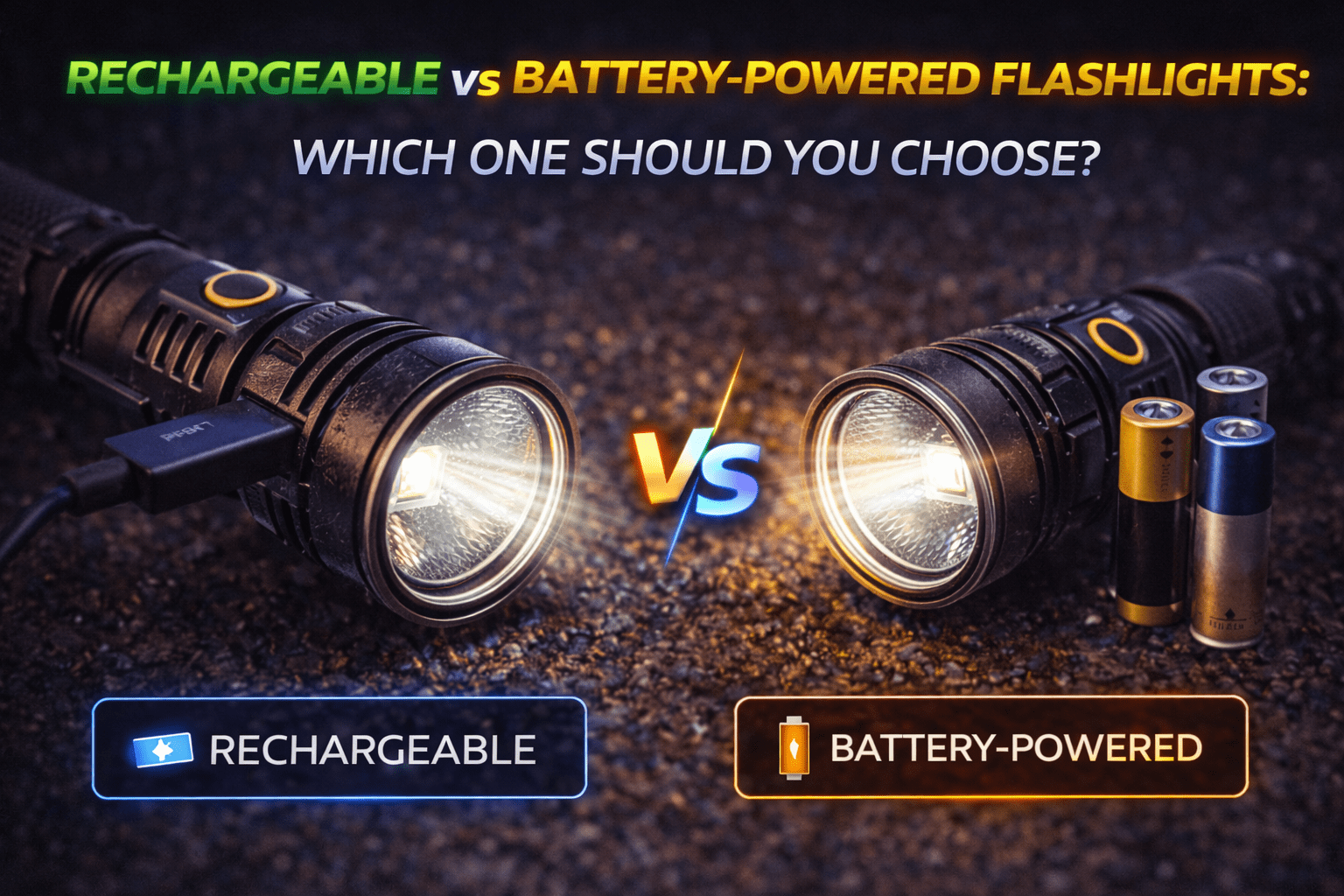
Choosing the right flashlight involves more than just comparing brightness or beam distance. One of the most important decisions is how the flashlight is powered. Modern flashlights typically fall into two categories: rechargeable flashlights and flashlights that use replaceable batteries.
Both systems have their advantages, and the best choice often depends on how you plan to use your flashlight. Outdoor enthusiasts, emergency preparedness users, and everyday carry enthusiasts may all prioritize different features when selecting a power source.
In this guide, we’ll compare rechargeable flashlights and battery-powered flashlights, explaining how they work, their advantages, and which situations they are best suited for. If you’re looking for powerful lighting tools built with modern battery technology and efficient LED systems, explore the range of Speras LED Flashlights designed for performance and reliability.
How Rechargeable Flashlights Work
Rechargeable flashlights typically use lithium-ion batteries, which are known for their high energy density, long lifespan, and ability to deliver consistent power output.
Lithium-ion batteries are commonly found in devices such as:
- smartphones
- laptops
- power tools
- high-performance flashlights
These batteries can be recharged hundreds of times using built-in charging systems or external battery chargers.
Many modern flashlights include USB charging ports, allowing users to recharge their flashlight using:
- wall chargers
- power banks
- car chargers
- solar charging systems
Rechargeable flashlights are designed for convenience and frequent use, making them popular among outdoor enthusiasts and professionals.
Advantages of Rechargeable Flashlights
Rechargeable flashlights offer several benefits that make them appealing for everyday use.
Lower Long-Term Cost
Although rechargeable flashlights may have a slightly higher upfront cost, they often save money over time. Instead of repeatedly buying disposable batteries, users simply recharge the same battery.
Over the lifespan of the flashlight, this can significantly reduce operating costs.
Higher Performance
Lithium-ion batteries provide strong and stable power output, which allows rechargeable flashlights to support higher brightness levels and more advanced features.
Many high-performance flashlights capable of producing thousands of lumens rely on rechargeable battery systems.
This consistent power delivery also allows the flashlight to maintain stable brightness for longer periods.
Environmentally Friendly
Rechargeable batteries reduce the need for disposable batteries, which helps minimize environmental waste.
Since lithium-ion batteries can be recharged many times, fewer batteries end up in landfills over time.
For users who frequently rely on flashlights, rechargeable systems are generally a more sustainable choice.
Convenient Charging Options
Modern rechargeable flashlights often include USB-based charging systems that make it easy to recharge almost anywhere.
This flexibility allows users to recharge their flashlight using common power sources such as portable power banks or vehicle charging ports.
For outdoor adventures and travel, this convenience can be extremely valuable.
Advantages of Replaceable Battery Flashlights
Flashlights that use replaceable batteries still offer several advantages, especially in specific situations.
These flashlights typically use common battery types such as:
- AA batteries
- AAA batteries
- CR123A batteries
Because these batteries are widely available, replaceable battery flashlights can be useful in remote or emergency situations.
Easy Battery Replacement
One of the biggest advantages of replaceable battery flashlights is that the power source can be swapped instantly.
If the flashlight runs out of power, simply inserting fresh batteries allows the flashlight to continue operating immediately.
This is particularly helpful when charging is not available.
Ideal for Emergency Kits
Many emergency preparedness kits include flashlights that use replaceable batteries.
In emergency situations such as power outages or natural disasters, spare batteries can provide immediate backup power.
Because batteries can be stored for long periods, replaceable battery flashlights are often used in emergency supplies.
Useful in Remote Locations
For extended trips in remote environments where charging equipment is not available, replaceable batteries can provide a reliable power source.
Carrying spare batteries ensures that the flashlight can continue operating even during long expeditions.
This is why some explorers and survivalists still prefer flashlights with replaceable batteries.
Performance Differences
Rechargeable flashlights and replaceable battery flashlights also differ in terms of overall performance.
Brightness Potential
Rechargeable lithium-ion batteries can typically deliver higher electrical current compared to disposable batteries.
This allows rechargeable flashlights to achieve higher brightness levels, especially in high-output models designed for professional or outdoor use.
Runtime Efficiency
Lithium-ion batteries are known for their high energy density, meaning they can store more energy relative to their size.
This often allows rechargeable flashlights to provide longer runtime at higher brightness levels.
Replaceable batteries may offer shorter runtime depending on battery type and capacity.
Consistency of Output
Rechargeable batteries combined with advanced driver circuits often maintain more stable brightness levels during use.
Disposable batteries may gradually lose brightness as their voltage drops over time.
This difference can affect the consistency of illumination during extended use.
Best Use Cases for Each Type
Both power systems have advantages depending on how the flashlight will be used.
Best Uses for Rechargeable Flashlights
Rechargeable flashlights are ideal for:
- everyday carry
- camping and hiking
- professional work
- frequent flashlight use
- outdoor adventures
Because they offer strong performance and convenient charging options, rechargeable flashlights are the preferred choice for many modern users.
Best Uses for Replaceable Battery Flashlights
Flashlights with replaceable batteries are often best suited for:
- emergency kits
- disaster preparedness
- remote expeditions
- backup lighting systems
In situations where charging is unavailable, the ability to swap batteries quickly can be extremely useful.
Which One Should You Choose?
The right choice ultimately depends on how you plan to use your flashlight.
Rechargeable flashlights are typically the best option for users who:
- use their flashlight frequently
- want maximum brightness and performance
- prefer convenient USB charging
- want to reduce battery waste
Replaceable battery flashlights may be better suited for users who:
- keep flashlights in emergency kits
- travel in remote environments
- prefer easily replaceable power sources
For most everyday applications, modern rechargeable flashlights offer excellent convenience, performance, and long-term value.
Final Thoughts
Both rechargeable and battery-powered flashlights have their advantages, and each type serves a purpose depending on the user’s needs.
Rechargeable flashlights provide powerful performance, lower long-term costs, and convenient charging options, making them an excellent choice for frequent use and outdoor activities.
Replaceable battery flashlights remain useful for emergency situations and environments where charging may not be available.
Understanding the strengths of each power system helps users choose the flashlight that best fits their lifestyle and intended use.
If you’re looking for high-performance lighting tools designed with advanced battery technology and durable construction, explore the range of Speras LED Flashlights built for reliability in demanding environments.