Best Flashlights and Headlamps for Hiking and Camping: What to Look For
When you’re exploring the outdoors, reliable lighting can make the difference between a smooth adventure and a stressful situation. Whether you’re hiking after sunset, setting up camp in the dark, or navigating a trail before sunrise, having the right lighting gear is essential for both safety and convenience.
While many outdoor enthusiasts pack a flashlight or headlamp as part of their essential gear, choosing the right lighting tool involves more than simply picking the brightest option available. Factors such as beam pattern, runtime, battery type, durability, and weight all play important roles when selecting lighting equipment for hiking and camping.
In this guide, we’ll explain what features matter most when choosing a flashlight or headlamp for outdoor adventures and how to ensure your lighting gear performs reliably in demanding environments.
Why Lighting Matters for Outdoor Adventures
Outdoor environments change dramatically once the sun goes down. Trails that were easy to navigate during daylight can become difficult and potentially dangerous in darkness.
Proper lighting is critical for several reasons:
Trail Navigation
A reliable light source allows hikers to clearly see the trail ahead, avoid obstacles, and identify potential hazards such as rocks, roots, or uneven terrain.
Campsite Tasks
Setting up tents, preparing food, or organizing gear after sunset becomes significantly easier with proper lighting.
Emergency Situations
If a hike takes longer than expected or weather conditions change, having dependable lighting ensures you can safely navigate your surroundings.
For these reasons, experienced hikers and campers always carry at least one reliable light source, and many carry both a flashlight and a headlamp.
Flashlight vs Headlamp for Hiking and Camping
Both flashlights and headlamps have advantages in outdoor settings. The right choice often depends on how the light will be used.
Flashlight Advantages
Flashlights are excellent for situations where you need a strong directional beam.
Benefits include:
- Greater beam distance
- Higher brightness levels
- Easier scanning of distant areas
Flashlights are particularly useful when you want to illuminate objects farther away, such as when checking trail conditions or looking for campsite markers.
Headlamp Advantages
Headlamps are extremely popular among hikers and campers because they provide hands-free lighting.
Benefits include:
- Hands-free operation
- Light directed wherever you look
- Comfortable for extended use
- Ideal for campsite tasks
Headlamps are perfect for activities such as cooking, assembling gear, or navigating trails while using trekking poles.
Many outdoor enthusiasts carry both a headlamp and a flashlight, using each tool for different purposes.
Recommended Brightness for Outdoor Use
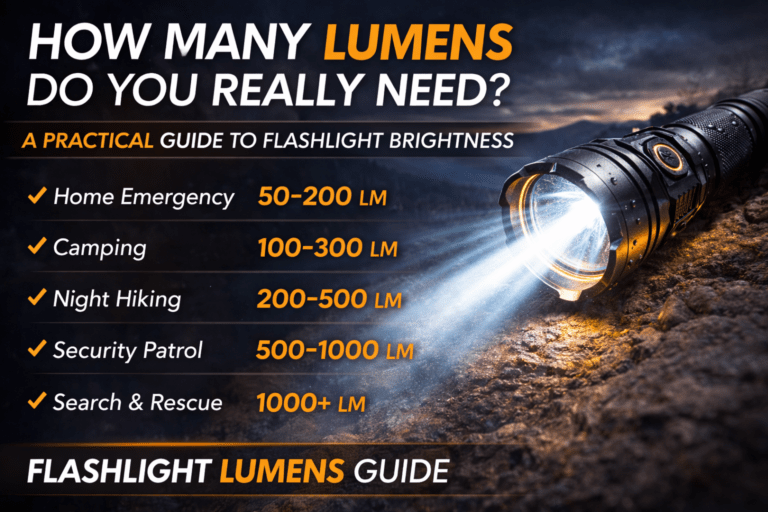
Flashlight brightness is typically measured in lumens, which indicate the total light output produced by the LED.
The brightness you need depends on the activity.
| Activity | Recommended Lumens |
|---|---|
| Basic camp tasks | 50–150 lumens |
| Walking around camp | 100–300 lumens |
| Night hiking | 200–500 lumens |
| Trail running | 300–600 lumens |
| Emergency navigation | 500+ lumens |
Higher brightness levels can be useful for identifying distant objects, but they also consume battery power more quickly.
Many outdoor lights include multiple brightness modes, allowing users to switch between low, medium, and high output depending on the situation.
Battery Types for Outdoor Lighting
Battery performance is one of the most important factors when selecting outdoor lighting gear. Long hikes or multi-day camping trips require lights that offer reliable runtime and convenient recharging options.
Rechargeable Lithium-Ion Batteries
Rechargeable batteries are increasingly popular in modern flashlights and headlamps.
Advantages include:
- High energy capacity
- Consistent brightness output
- USB charging convenience
- Lower long-term cost
These batteries are ideal for frequent outdoor use.
18650 and 21700 Batteries
High-performance flashlights often use 18650 or 21700 lithium-ion batteries, which provide excellent runtime and strong power output.
These batteries are widely used in professional outdoor lighting tools.
Disposable Batteries
Some headlamps use AA or AAA batteries, which can be useful on long trips where recharging may not be possible.
Because they are easy to replace, disposable batteries are often used as a backup power option.
Waterproof and Durability Requirements
Outdoor gear must be able to withstand challenging conditions. Rain, mud, and rough terrain can quickly damage poorly built lighting equipment.
When choosing a flashlight or headlamp for hiking or camping, consider the following durability features.
Waterproof Rating
Outdoor lights should ideally have IPX6 or higher waterproof ratings, allowing them to withstand heavy rain or water exposure.
Impact Resistance
Flashlights made from aircraft-grade aluminum offer excellent durability and can withstand drops or rough handling.
Dust Protection
Outdoor environments often involve dust or dirt, so sealed designs help prevent contamination of internal components.
These features ensure your lighting gear continues working even in unpredictable outdoor conditions.
Useful Features for Outdoor Flashlights and Headlamps
Modern lighting equipment often includes additional features that improve usability during outdoor adventures.
Multiple Brightness Modes
Adjustable brightness levels allow users to balance visibility with battery life.
Red Light Mode
Red light preserves night vision and is useful for navigating campsites without disturbing others.
Lockout Mode
This feature prevents the light from turning on accidentally inside a backpack.
USB Charging
Many modern lights include USB charging ports, making it easier to recharge batteries using power banks or solar chargers.
Lightweight Design
For hikers and backpackers, weight matters. Lightweight lights reduce fatigue and make long trips more comfortable.
These features make modern flashlights and headlamps far more practical for outdoor use.
Choosing the Right Light for Your Adventure
Different outdoor activities require different lighting solutions. Understanding your needs helps ensure you choose the most practical tool.
| Activity | Recommended Light Type |
|---|---|
| Camping | Headlamp |
| Backpacking | Lightweight headlamp |
| Night hiking | Headlamp or hybrid flashlight |
| Trail running | Lightweight headlamp |
| Emergency kit | Compact flashlight |
| Search and rescue | High-output flashlight |
Selecting the right lighting tool helps ensure safety, visibility, and comfort during outdoor activities.
Final Thoughts
Reliable lighting is one of the most important pieces of gear for any outdoor adventure. Whether you are hiking at night, setting up camp after sunset, or preparing for unexpected emergencies, having the right flashlight or headlamp ensures you can safely navigate your surroundings.
The best outdoor lighting tools balance brightness, runtime, durability, and portability. By understanding how these factors work together, hikers and campers can choose lighting equipment that performs reliably in the environments they explore.
High-quality lighting gear designed for outdoor use helps ensure that no matter where your adventure takes you, you’ll always have dependable illumination when you need it most.