The Ultimate Field Maintenance Guide: Keeping Your Flashlight Reliable in Harsh SA Conditions
Whether you’re out on a farm in the Karoo, patrolling a perimeter in the humid coastal regions, or simply keeping a light handy for the next bout of loadshedding, your Speras flashlight is a high-performance tool. It’s built to withstand the elements, but even the toughest gear needs a bit of “TLC” to ensure it performs at its peak when the pressure is on.
Think of your flashlight like a bakkie: it’s designed for the rough stuff, but if you never service the engine, you’re eventually going to get stranded. Here is how you can keep your light running bright for years to come.
The “Dirty Truth”: Why Maintenance Matters
South African environments are notoriously harsh. Fine dust, salt-laden sea air, and extreme heat cycles can take their toll on precision electronics. When dirt builds up on threads or oxidation forms on battery contacts, you might experience flickering, dimming, or—worst of all—a complete failure during an emergency.
Don’t wait for your light to die to show it some love. A quick 5-minute service once a month can make the difference between a reliable companion and a paperweight.
1. Cleaning Your Electrical Contacts
If your light starts flickering or refuses to turn on, the culprit is often “oxidation”—a thin, invisible layer of grime or corrosion on the metal contact points.
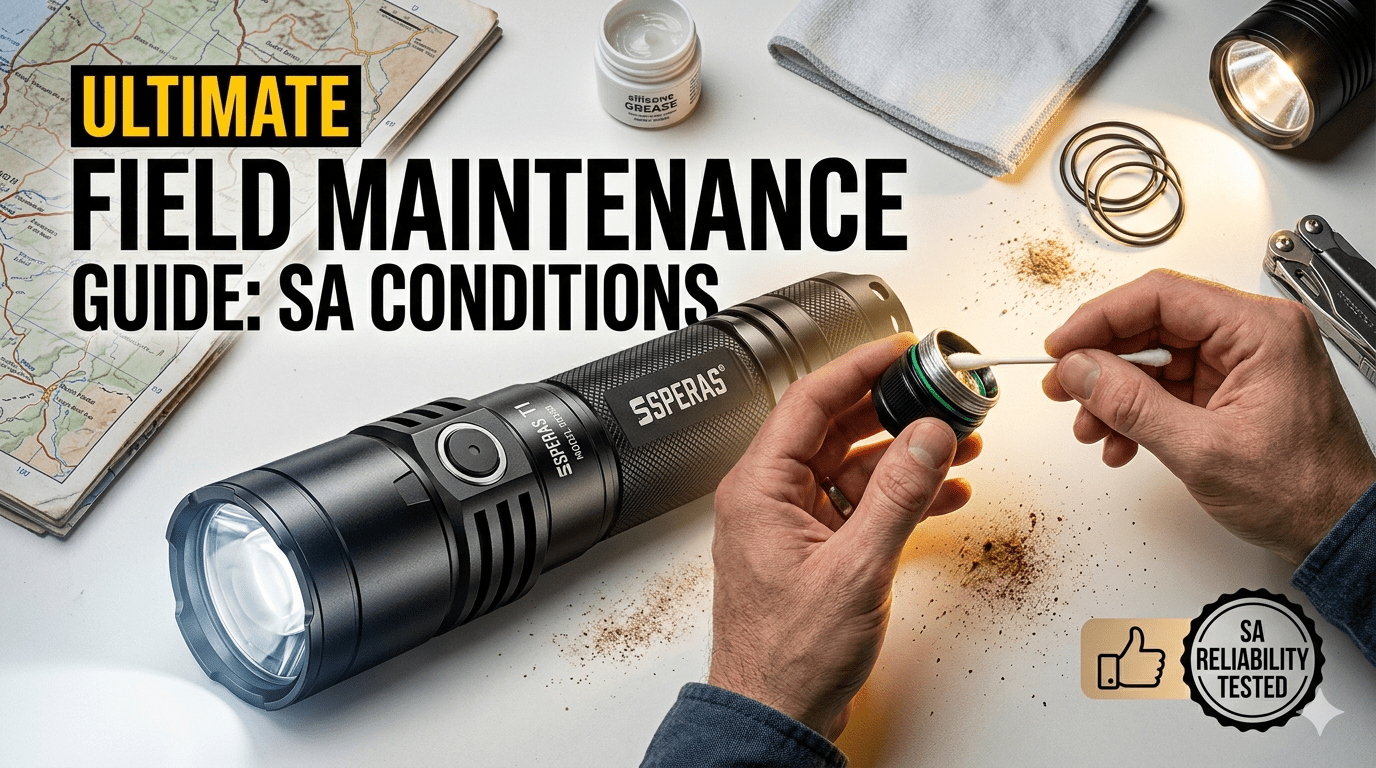
- How to do it: Remove your battery. Take a cotton swab (Q-tip) lightly dampened with high-percentage isopropyl alcohol. Gently rub the brass contacts at the head of the light, the spring in the tail cap, and the battery terminals.
- Pro Tip: If you notice actual rust or stubborn corrosion on the spring, use a very fine-grit sandpaper or a pencil eraser to gently scrape it away, then wipe clean with a dry cloth.
2. O-Ring & Thread Care
The O-rings (the small rubber seals) are what keep dust and water out of your light’s internal components. If these dry out or get clogged with grit, that watertight seal is compromised.
- The Process: Unscrew the tail cap or head (wherever the threads are). If they feel “gritty” when you turn them, dirt has entered the system. Use a soft toothbrush to gently clean the threads, then wipe them dry.
- The Lube: Once clean, apply a tiny, thin layer of silicone-based grease to the O-ring and the threads.
- Warning: Never use petroleum-based products like Vaseline. They will eventually cause the rubber O-rings to swell and degrade, ruining your light’s weather resistance.
3. Maintaining the Lens
A scratched or smudged lens can scatter your beam, significantly reducing the “throw” and clarity of your light.
- Step 1: Use a blast of compressed air (or a clean, dry brush) to remove any loose sand or grit—never wipe the lens while grit is on it, as you’ll create micro-scratches.
- Step 2: Use a microfiber cloth with a small amount of lens cleaner or isopropyl alcohol to gently wipe in circular motions. Avoid using paper towels or tissues, which are abrasive and can leave tiny scratches on high-quality optical glass.
4. Battery Health in the Heat
South Africa’s intense summer heat is the enemy of Lithium-Ion batteries. Heat speeds up the chemical degradation of the battery, permanently reducing its capacity.
- Storage Wisdom: Never leave your high-performance light—or spare batteries—in direct sunlight on a dashboard or in a sweltering glovebox.
- Long-Term Storage: If you are storing a light for more than a few weeks, don’t leave the battery at 100% or 0%. Aim for about 50% charge. Store the light in a cool, dry place, away from extreme temperature fluctuations.
Quick Maintenance Checklist
| Component | Action | Frequency |
|---|---|---|
| Threads | Wipe clean & re-grease | Every 3-6 months |
| Contacts | Wipe with alcohol swab | Every 6 months or if flickering |
| Lens | Blow off dust/microfiber wipe | As needed |
| O-Rings | Inspect for tears/cracks | Yearly |
Pro Tip: The “Submersion Test”
If you accidentally drop your light in a muddy puddle, don’t just wipe the outside. Rinse it off with clean, fresh water (ensuring the tail cap is tight), dry it thoroughly, and then open it up to ensure no moisture made its way into the battery compartment.Conclusion: An Investment in Reliability
Your Speras flashlight is an investment in your safety and preparedness. By spending just a few minutes keeping the contacts clean, the threads lubricated, and the batteries cool, you’re ensuring that your light remains as powerful as the day you bought it.
Ready to upgrade your maintenance game?
Explore our range of accessories and cleaning kits to keep your gear in top condition, or browse our latest durable flashlight collection if it’s time for an upgrade. Stay bright!