Tactical Flashlight Techniques: Using Light for Self-Defence and Urban Safety
In a country where preparedness and situational awareness are part of daily life, few tools are as underrated — or as effective — as a tactical flashlight. Designed for more than just illumination, these compact devices give security professionals and everyday citizens alike a reliable, non-lethal way to protect themselves and maintain visibility in any environment.
Whether used by neighbourhood watch teams, security officers, or safety-conscious individuals, a tactical flashlight is an essential companion in the dark — a tool that can both reveal and deter.
What Makes a Flashlight “Tactical”?
Unlike standard torches, a tactical flashlight is purpose-built for performance, durability, and defensive capability. Originating from military and law-enforcement design, these flashlights are engineered to function under pressure.
Key features that define a true tactical flashlight include:
- High lumen output for strong, concentrated beams that can light up large spaces or disorient an aggressor.
- Durable build — typically aerospace-grade aluminium or impact-resistant polymer.
- Tail-switch operation for quick, one-handed control.
- Multiple modes, including strobe and SOS, for emergency or defensive use.
- Compact, ergonomic design for easy carry and fast access.
These qualities make tactical flashlights invaluable not only for security professionals but also for civilians looking to increase their sense of safety and preparedness.
👉 Explore the full Speras collection of professional-grade Tactical Flashlights designed for South African conditions.
The Defensive Power of Light
Light can be an effective form of control. In self-defence, it provides two vital advantages: visibility and deterrence.
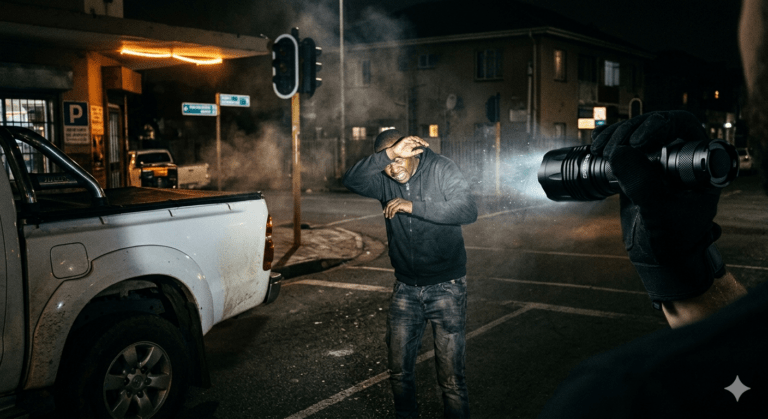
A high-powered beam can reveal a threat before it becomes a danger — allowing you to assess, identify, and react. In some cases, the light itself can act as a non-lethal deterrent. The sudden flash of a strobe or focused beam can overwhelm an attacker’s vision and sense of orientation, giving you crucial seconds to escape or take defensive action.
This is often referred to as “using light as force control” — employing brightness strategically to manage or defuse a situation without escalating it.
Core Flashlight Techniques for Self-Defence and Patrol Use
Tactical lighting isn’t just about what you carry, but how you use it. The following techniques, adapted from professional training, can make your flashlight far more effective in real situations.
1. The FBI Technique
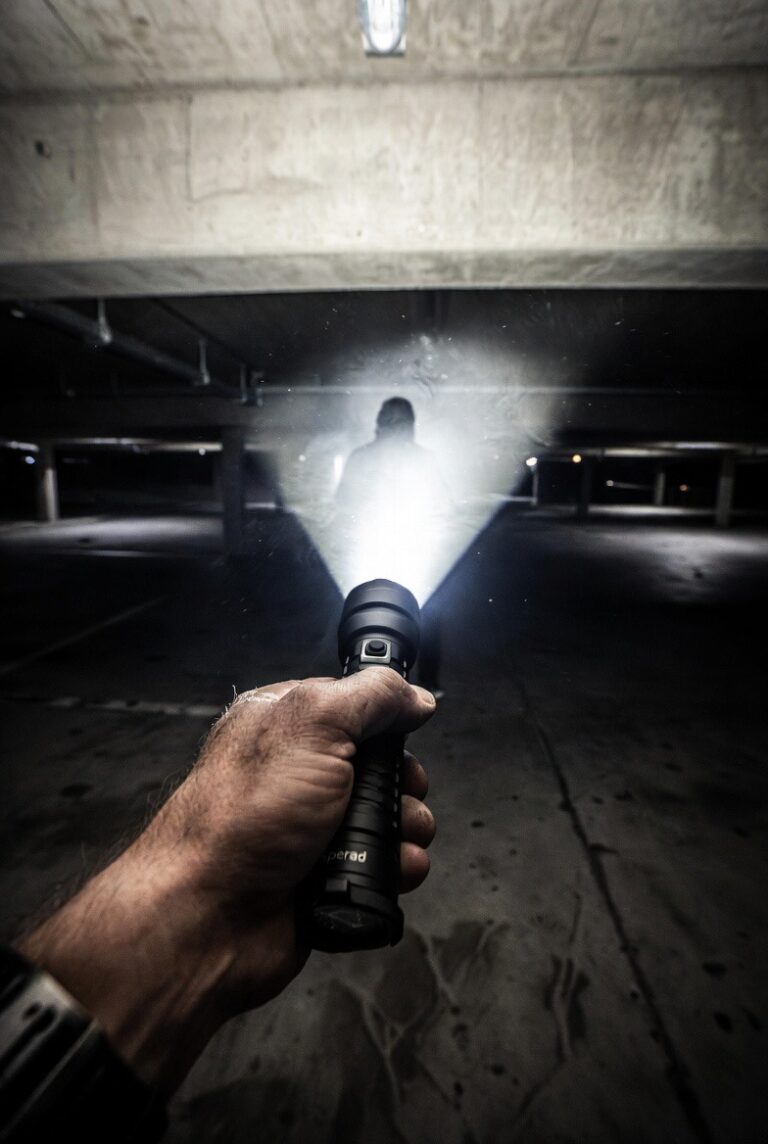
Hold the flashlight high and away from your body, about shoulder height. This position prevents a potential attacker from targeting your body based on your light source. It also gives flexibility in scanning corners or ceilings without casting your own shadow into the field of view.
2. The Neck-Index Technique
Common among law enforcement, this method positions the flashlight against the side of your neck with the beam parallel to your line of sight. It allows quick, coordinated movements between light and firearm use, while maintaining control of both.
3. The Harries Technique
A classic stance used with a firearm: the flashlight is held in your non-dominant hand, beneath the dominant hand holding the firearm. The backs of the hands press together, creating a stable, two-handed platform. Even without a weapon, this grip helps stabilise the light in a defensive posture.
4. The Low-Ready Sweep
When moving through dark environments — such as during patrols or in power-outage conditions — keep your flashlight angled slightly down. This prevents glare and allows you to identify obstacles or movement at ground level before advancing.
5. Momentary Activation
Rather than leaving the light on continuously, use short bursts of illumination to scan your surroundings. This preserves your night vision and prevents others from easily locating your position.
Each of these techniques improves safety and awareness — the core goals of tactical light use.
The Role of the Strobe Function in Self-Defence
A properly executed strobe is one of the most effective non-lethal tools available. High-frequency flashes of light can cause temporary visual impairment and confusion, buying time to retreat, call for help, or take defensive action.
When used responsibly, the strobe function allows you to control the pace of an encounter. It disorients rather than harms, reducing the likelihood of escalation.
In urban South African environments — parking garages, apartment corridors, driveways, or perimeter patrols — this capability can make a meaningful difference.
⚠️ Tip: Always familiarise yourself with your flashlight’s strobe activation sequence. In tense situations, fine motor control decreases — you need to access it instinctively.
Practical Applications in Urban and Home Safety
Beyond self-defence, tactical flashlights are invaluable for day-to-day security awareness:
- Home security: Identify noises or movement around your property during load-shedding or late-night checks.
- Vehicle safety: Illuminate tyres, undercarriages, or roadside hazards during breakdowns or power failures.
- Neighbourhood watch: Coordinate teams with light signals or controlled illumination to avoid compromising positions.
- Urban patrols: Inspect dark alleyways, entrances, or building perimeters where permanent lighting is limited.
These real-world scenarios show how light bridges the gap between preparedness and peace of mind.
Accessories That Enhance Tactical Use
Speras designs a range of accessories that extend functionality for professionals and enthusiasts alike:
- Traffic Wands – Convert your flashlight into a visible signalling baton for roadside or emergency control.
- Remote Pressure Switches – Allow instant on/off activation when mounted to a weapon or tactical platform.
- Weapon Mounts and Holsters – Secure your flashlight for quick deployment and consistent access.
- Coloured Filters – Red or green filters preserve night vision and are useful for discreet signalling.
These accessories transform a simple flashlight into a complete tactical system — adaptable to any mission or environment.
Responsible Use and Training
Owning a tactical flashlight is only the first step. Using it effectively requires practice and respect for both the tool and its potential.
- Train regularly: Practise activating modes and changing grips under different conditions.
- Understand legality: Use light for defence and deterrence, never aggression.
- Maintain equipment: Check batteries, seals, and switches regularly for reliability.
- Stay aware: Your most valuable safety tool is situational awareness — the flashlight simply enhances it.
Empowered by Light
A tactical flashlight isn’t just a gadget — it’s an empowerment tool. In the right hands, it offers control, confidence, and calm when the unexpected happens.
Whether used for home defence, urban patrols, or emergency response, tactical lighting helps turn uncertainty into visibility and fear into preparedness.
For performance built on precision and trust, choose Speras — where light meets purpose.
👉 Explore the latest range of Tactical Flashlights engineered for professionals, security teams, and safety-minded South Africans.