How to Choose the Right Headlamp: Brightness, Beam Type, and Battery Explained
Headlamps have become essential gear for outdoor adventures, professional work, and emergency preparedness. Whether you’re hiking at night, setting up camp, repairing equipment, or navigating a dark trail, a headlamp offers something a traditional flashlight cannot: hands-free illumination.
But choosing the right headlamp can be confusing. Modern models vary widely in brightness, beam pattern, battery type, and features. Many buyers focus only on lumen numbers, yet the best headlamp for your needs depends on how you plan to use it.
In this guide, we’ll explain how headlamps work, what specifications actually matter, and how to select the right one for your activities. If you’re looking for high-performance options designed for outdoor and professional use, you can explore the full range of ****.
Why Headlamps Are Better Than Flashlights for Many Tasks
Flashlights are useful tools, but headlamps offer a major advantage: hands-free lighting.
Instead of holding a light in your hand, a headlamp directs light wherever you look. This makes it ideal for situations where both hands are needed.
Common activities where headlamps outperform flashlights include:
- Hiking or trail running
- Camping and setting up tents
- Mechanical repairs
- Fishing at night
- Search and rescue operations
- Emergency preparedness
For outdoor enthusiasts and professionals alike, headlamps improve efficiency, safety, and mobility, especially when working in dark environments.
Understanding Headlamp Brightness (Lumens)
Brightness is usually the first specification buyers notice when comparing headlamps. It is measured in lumens, which indicate the total amount of visible light emitted by the lamp. (Backpackers.com)
Modern headlamps range from around 25 lumens to over 1000 lumens, depending on the intended use. (Next Adventure)
However, more lumens do not always mean a better headlamp. High brightness levels drain batteries faster and may not be necessary for most activities.
Recommended Lumen Levels
Here is a practical guideline based on common outdoor uses:
| Activity | Recommended Lumens |
|---|---|
| Reading inside a tent | 10–50 lumens |
| Camping tasks | 100–200 lumens |
| Hiking on a trail | 200–400 lumens |
| Trail running | 300–600 lumens |
| Technical climbing or search operations | 600–1000+ lumens |
For most campers and hikers, a headlamp producing 200–400 lumens provides a good balance of brightness and battery life. (GeekExtreme)
Lower brightness levels are also useful for preserving night vision and conserving battery power.
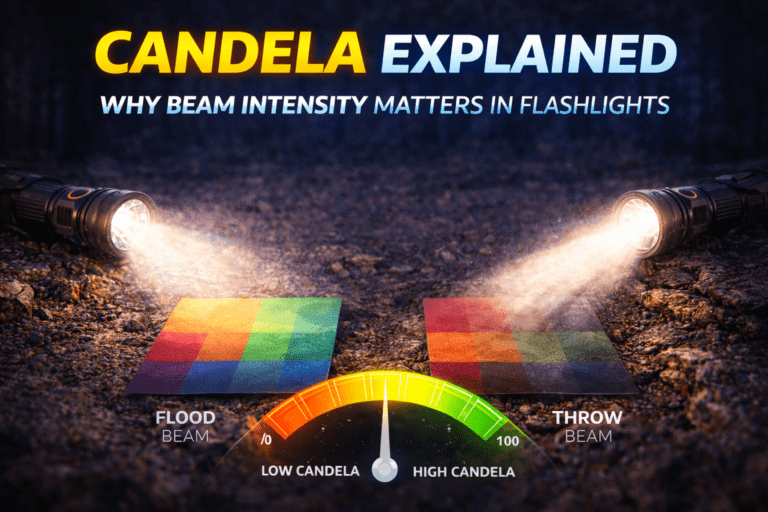
Flood vs Spot Beam Patterns
Another key factor when choosing a headlamp is beam pattern.
Headlamps generally use three types of light distribution.
Flood Beam
A flood beam spreads light over a wide area, making it ideal for tasks close to the user.
Best uses include:
- Cooking at a campsite
- Reading maps
- Equipment repairs
- Walking around camp
Flood beams improve visibility without concentrating too much light in one direction.
Spot Beam
A spot beam focuses light into a narrow, intense beam that reaches farther into the distance.
Spot beams are ideal for:
- Night hiking
- Navigating trails
- Search operations
- Identifying objects far ahead
Because they project light further, spot beams are often used in high-performance headlamps.
Hybrid Beam
Many modern headlamps combine both flood and spot beams.
Hybrid beams provide:
- Wide illumination for nearby tasks
- Focused light for distance viewing
This versatility makes hybrid headlamps a popular choice for outdoor activities.
Battery Types: Rechargeable vs Replaceable
The battery powering a headlamp significantly affects its runtime, weight, and convenience.
Rechargeable Lithium-Ion Batteries
Rechargeable batteries are increasingly common in modern headlamps.
Advantages include:
- Lower long-term cost
- Environmentally friendly
- Convenient USB charging
- Higher performance output
Rechargeable lithium-ion batteries are especially useful for frequent users.
AAA Battery Headlamps
Some headlamps still rely on traditional AAA batteries.
Advantages include:
- Easy battery replacement in remote areas
- Widely available power source
- Good backup option for long trips
Many outdoor enthusiasts prefer headlamps that support both rechargeable and replaceable batteries for maximum flexibility.
Comfort and Ergonomics
A headlamp may have impressive specifications, but it must also be comfortable to wear for extended periods.
Important comfort factors include:
Weight
Lighter headlamps are easier to wear for long hikes or runs. Many ultralight models weigh under 100 grams.
Balanced Design
Some headlamps distribute the battery pack at the back of the headband to balance the weight.
Adjustable Straps
Elastic headbands should be adjustable, breathable, and secure during movement.
Tilt Function
A tilting lamp allows you to adjust the beam direction without moving your head.
These design elements can significantly improve comfort during long outdoor activities.
Durability and Waterproof Ratings
Outdoor equipment must withstand challenging conditions, including rain, mud, and impact.
Headlamps use IP ratings to describe water resistance.
Common ratings include:
| Rating | Protection Level |
|---|---|
| IPX4 | Splash resistant |
| IPX6 | Resistant to heavy rain |
| IPX7 | Waterproof when briefly submerged |
| IPX8 | Designed for prolonged water exposure |
For most outdoor activities, an IPX4 or IPX6 rating is sufficient, while extreme environments may require higher waterproof protection.
Useful Headlamp Features
Modern headlamps often include additional features that improve usability.
Red Light Mode
Red LEDs help preserve night vision and are useful in campsites or group settings.
Lockout Mode
Prevents the headlamp from turning on accidentally inside a backpack.
Motion Sensors
Some headlamps allow hands-free operation using motion gestures.
Multiple Brightness Modes
Adjustable brightness helps conserve battery life.
Memory Mode
Remembers your last brightness setting for convenience.
These features can greatly enhance the overall user experience.
Choosing the Right Headlamp for Your Activity
Different activities require different lighting characteristics.
Here is a quick guide to help match headlamp types to common uses.
| Activity | Recommended Headlamp Type |
|---|---|
| Camping | Lightweight flood beam |
| Hiking | Hybrid beam with 200–400 lumens |
| Trail running | Lightweight, balanced headlamp |
| Fishing | Waterproof headlamp |
| Emergency kit | Compact headlamp with long runtime |
| Professional work | Durable high-output headlamp |
Understanding how brightness, beam type, and battery capacity interact will help you select the most practical option for your needs.
Final Thoughts
Choosing the right headlamp involves more than simply comparing lumen numbers. The best headlamp balances brightness, beam pattern, battery life, comfort, and durability.
For most users, a headlamp with adjustable brightness, a hybrid beam pattern, and a reliable battery system provides the greatest versatility for outdoor and professional tasks.
Whether you are exploring trails at night, preparing a campsite, or working in low-light conditions, the right headlamp can dramatically improve both safety and efficiency.
If you’re looking for dependable lighting equipment built for demanding environments, you can explore the latest models in the ****, designed for outdoor adventurers and professionals who rely on reliable illumination.