Candela Explained: Why Beam Intensity Matters in Flashlights
When people compare flashlights, the first specification they usually look at is lumens. Higher lumens typically mean a brighter flashlight, so it’s easy to assume that the flashlight with the biggest lumen number is automatically the best choice.
However, brightness alone doesn’t determine how well a flashlight performs. Another important specification that many people overlook is candela, which measures the intensity of the beam. In many real-world situations, candela plays a much bigger role than lumens in determining how far a flashlight can actually illuminate.
In this guide, we’ll explain what candela in flashlights means, how it differs from lumens, and why beam intensity is an essential factor when choosing a high-performance lighting tool. If you’re looking for powerful lighting equipment designed for durability and performance, you can explore professional options in the Speras LED Flashlights collection.
What Is Candela?
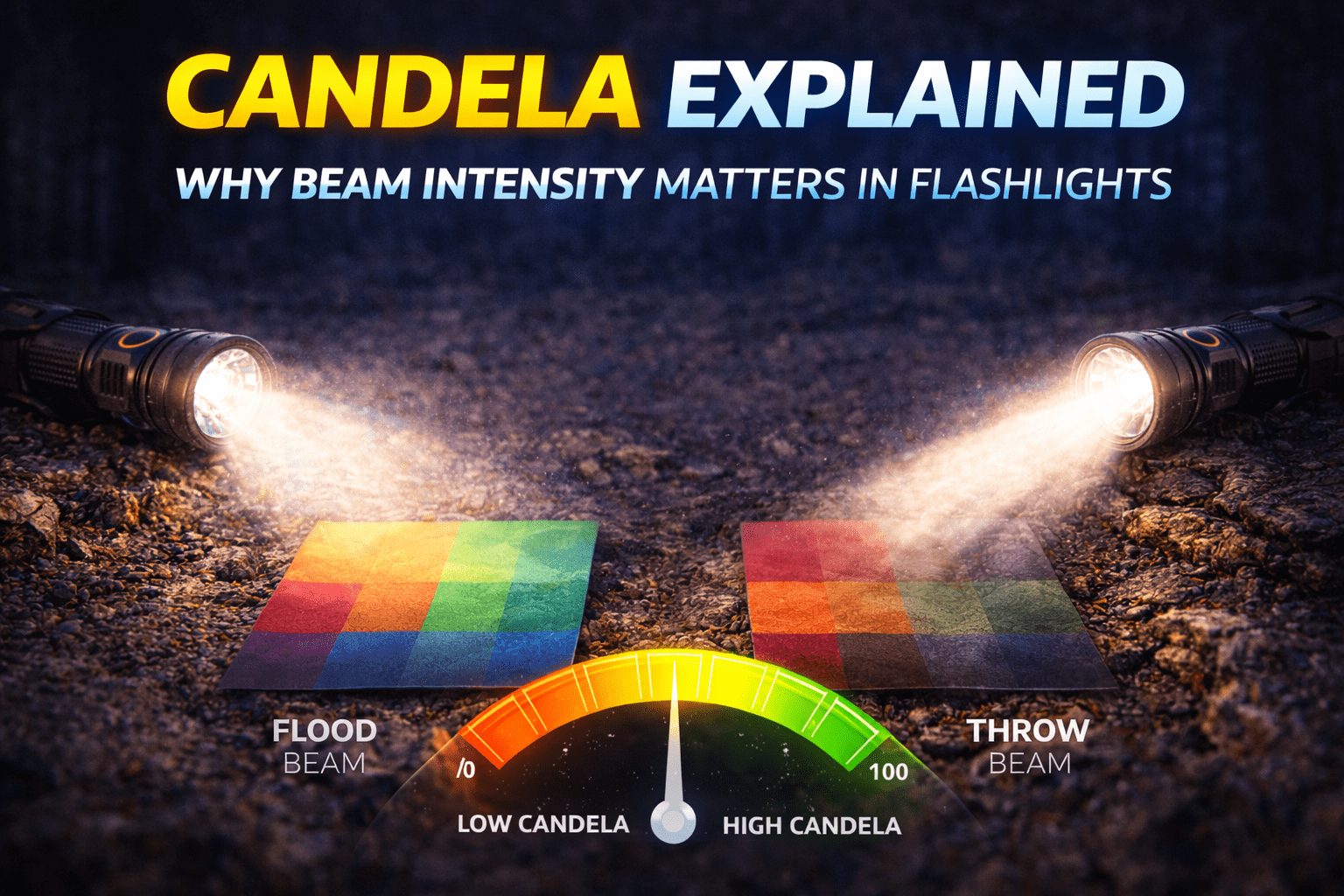
Candela is a unit of measurement used to describe light intensity in a specific direction. In flashlights, candela indicates how concentrated or focused the beam of light is.
While lumens measure the total amount of light emitted by the flashlight, candela measures how tightly that light is focused into a beam.
A flashlight with high candela produces a more concentrated beam that can reach farther distances. A flashlight with lower candela spreads the light over a wider area, which is useful for illuminating nearby surroundings.
In simple terms:
- Lumens = total brightness
- Candela = beam intensity
Understanding both measurements helps explain why two flashlights with the same lumen rating can perform very differently.
Candela vs Lumens: Understanding the Difference
Many buyers focus only on lumens because the number is easy to understand. However, lumens alone cannot tell you how far a flashlight will actually shine.
Consider two flashlights with the same brightness rating of 1000 lumens.
- Flashlight A uses a wide flood beam.
- Flashlight B uses a narrow, focused beam.
Even though both lights produce the same number of lumens, the focused beam of Flashlight B will reach much farther because the light is concentrated into a smaller area.
This is where candela becomes important.
A flashlight with high candela and moderate lumens may outperform a flashlight with very high lumens but low candela when it comes to long-distance visibility.
How Candela Affects Beam Distance
Candela plays a direct role in determining how far a flashlight beam can travel. Manufacturers often list beam distance, which indicates how far the light can project before its brightness falls to a specific threshold.
This beam distance is calculated using the candela value of the flashlight.
Generally speaking:
- Higher candela = longer beam distance
- Lower candela = shorter beam distance
For example:
| Candela Level | Typical Beam Distance |
|---|---|
| 5,000 cd | short to medium range |
| 20,000 cd | medium range |
| 100,000+ cd | long-distance throw |
Flashlights designed for long-distance visibility often use reflectors and optics that maximize candela by focusing the light into a narrow beam.
What Is a High Candela Flashlight?
A high-candela flashlight is designed to project light over long distances. These flashlights often feature deep reflectors or specialized optics that concentrate the beam into a tight hotspot.
This focused beam allows the flashlight to illuminate objects far away, making high-candela lights ideal for certain applications.
Common uses include:
Search and Rescue
Emergency responders often need to locate people or objects over large areas. A high-intensity beam helps illuminate distant terrain.
Security Patrol
Security professionals frequently rely on flashlights to inspect large areas or identify activity in low-light environments.
Hunting and Wildlife Observation
Hunters and outdoor enthusiasts use long-throw flashlights to identify animals or terrain features at a distance.
Marine Navigation
On boats or near water, long beam distance helps illuminate distant markers or obstacles.
In these situations, beam intensity matters far more than total brightness.
Flood vs Throw Beam Patterns
Flashlight beam patterns generally fall into two categories: flood beams and throw beams.
Flood Beams
Flood beams spread light over a wide area. This design is useful for close-range illumination because it lights up a large portion of the environment.
Flood beams are ideal for:
- camping
- walking trails
- working indoors
- general-purpose lighting
These flashlights typically have lower candela values because the light is distributed widely.
Throw Beams
Throw beams focus light into a narrow hotspot, producing higher candela values and longer beam distance.
Throw flashlights are designed for:
- long-distance visibility
- search operations
- security work
- outdoor exploration
These flashlights often use deep reflectors or precision optics to maximize beam intensity.
The Role of Reflectors and Optics
The design of a flashlight’s reflector and lens has a major impact on candela and beam performance.
Several factors influence beam intensity:
Reflector Depth
Deeper reflectors concentrate the light into a tighter beam, increasing candela.
LED Position
The position and size of the LED emitter affect how the beam forms as it passes through the reflector.
Lens Design
High-quality lenses help control light dispersion and improve beam clarity.
Manufacturers carefully design these optical components to balance beam distance, brightness, and usability.
Choosing the Right Beam Intensity
The ideal candela level depends on how the flashlight will be used.
Here is a simple guide to help match beam intensity with common use cases.
| Activity | Recommended Beam Type |
|---|---|
| Camping | Flood beam |
| Hiking | Balanced beam |
| Home use | Wide beam |
| Security patrol | High candela |
| Search operations | High candela throw |
Most everyday users benefit from flashlights that provide a balanced beam, offering both adequate beam distance and useful peripheral lighting.
Why Modern Flashlights Balance Lumens and Candela
High-performance flashlights are designed to balance brightness and beam intensity. Simply maximizing one specification without considering the other can lead to poor real-world performance.
For example:
- A flashlight with extremely high lumens but low candela may produce bright light that doesn’t travel very far.
- A flashlight with extremely high candela but low lumens may have a narrow beam that provides little surrounding illumination.
The best flashlights combine:
- strong lumen output
- efficient beam focus
- durable construction
- reliable battery performance
This balanced design ensures the flashlight performs effectively across a variety of situations.
Final Thoughts
While lumens often receive the most attention when comparing flashlights, candela is just as important for understanding real-world performance. Beam intensity determines how far a flashlight can project light, making it a crucial specification for many outdoor and professional applications.
By understanding the difference between lumens and candela, you can make more informed decisions when choosing a flashlight that suits your needs.
Whether you’re exploring the outdoors, performing security work, or preparing for emergencies, selecting a flashlight with the right combination of brightness and beam intensity ensures dependable illumination when it matters most.
If you’re looking for high-performance lighting equipment designed for demanding environments, explore the Speras LED Flashlights collection built to deliver powerful brightness, efficient optics, and reliable performance.