Flashlight IP Ratings Explained: What Waterproof and Dustproof Ratings Mean
Flashlight IP Ratings Explained: What Waterproof and Dustproof Ratings Mean
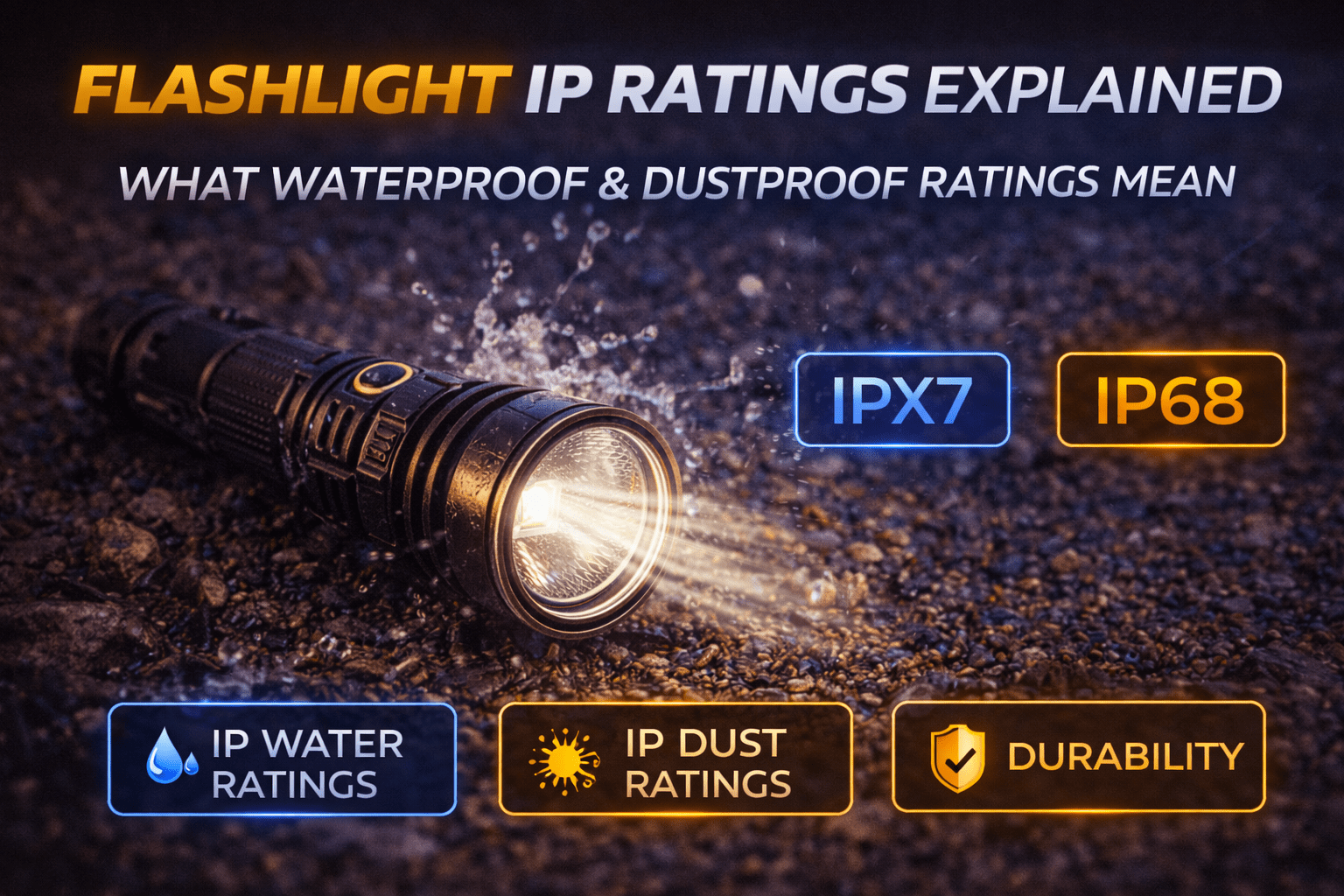
When shopping for a flashlight, you’ll often see technical specifications such as IPX4, IPX7, or IP68 listed in the product description. These ratings are known as IP ratings, and they provide important information about how well a flashlight can resist dust, moisture, and water exposure.
For outdoor enthusiasts, campers, security professionals, and anyone who relies on dependable lighting equipment, understanding these ratings can help you choose a flashlight that performs reliably in challenging conditions.
In this guide, we’ll explain what flashlight IP ratings mean, how water resistance is measured, and which rating is best for different environments. If you’re looking for durable lighting tools designed to withstand harsh outdoor conditions, explore the range of Speras LED Flashlights built with rugged construction and strong environmental protection.
What Is an IP Rating?
An IP rating, short for Ingress Protection rating, is an international standard that measures how well a device is protected against solid particles and liquids.
These ratings are commonly used for electronic equipment, including flashlights, headlamps, smartphones, and outdoor gear.
IP ratings are defined by the International Electrotechnical Commission (IEC) and follow a standardized format:
IPXY
Where:
- X represents protection against solid objects (such as dust)
- Y represents protection against water
The higher the numbers, the greater the level of protection provided by the device.
For flashlights, the most important factor is typically water resistance, since outdoor lighting equipment is often exposed to rain, moisture, and wet environments.
Understanding the Two Numbers in IP Ratings
To better understand how IP ratings work, it helps to break down the two numbers in the rating system.
First Number: Protection Against Dust
The first number in an IP rating represents protection against solid particles such as dust or debris.
Examples include:
| Dust Protection Level | Description |
|---|---|
| IP0X | No protection |
| IP4X | Protection against large particles |
| IP5X | Dust-protected (limited dust entry allowed) |
| IP6X | Completely dustproof |
Flashlights used in outdoor environments benefit from higher dust protection because they may be exposed to dirt, sand, or debris.
However, many flashlights skip dust testing entirely and instead use the IPX format.
What Does IPX Mean?
When the first digit is replaced with X, it simply means the device has not been tested for dust resistance.
For example:
IPX7 means the flashlight has been tested for water resistance but not specifically for dust protection.
Since water resistance is often more important for flashlights, many manufacturers focus primarily on water testing.
Common Water Resistance Ratings for Flashlights
The second number in the IP rating indicates how well the flashlight can resist water exposure.
Here are the most common water ratings found on flashlights.
IPX4 – Splash Resistant
Flashlights with an IPX4 rating are protected against water splashes from any direction.
This means the flashlight can safely handle:
- light rain
- splashes from water
- damp environments
However, IPX4-rated flashlights should not be submerged in water.
This level of protection is often suitable for basic outdoor use or everyday carry.
IPX6 – Heavy Rain Resistant
Flashlights rated IPX6 are protected against powerful water jets.
This rating means the flashlight can withstand:
- heavy rain
- strong water splashes
- harsh weather conditions
IPX6 flashlights are well suited for outdoor activities where exposure to rain is likely.
IPX7 – Temporary Water Immersion
An IPX7 rating indicates that the flashlight can survive temporary immersion in water.
Testing typically involves submerging the device in up to 1 meter of water for 30 minutes.
This level of protection means the flashlight can handle situations such as:
- accidental drops in water
- river crossings
- heavy rainstorms
Many outdoor flashlights designed for camping and hiking include IPX7 protection.
IPX8 – Continuous Water Immersion
IPX8 represents an even higher level of water resistance.
Flashlights with IPX8 ratings can withstand continuous immersion in water deeper than 1 meter, depending on the manufacturer’s specifications.
This rating is often found on high-performance flashlights designed for demanding environments.
IPX8 flashlights are ideal for:
- extreme outdoor conditions
- wet environments
- marine use
- professional applications
Why Water Resistance Matters for Flashlights
Outdoor lighting equipment is frequently exposed to unpredictable weather and environmental conditions.
Water resistance is important for several reasons.
Rain and Wet Weather
Camping, hiking, and outdoor adventures often involve unexpected rain. A water-resistant flashlight ensures reliable illumination even in poor weather conditions.
Accidental Water Exposure
Flashlights can easily be dropped into puddles, streams, or wet ground during outdoor activities.
Higher IP ratings provide protection against accidental water exposure.
Humid Environments
Coastal regions and humid climates can expose electronics to moisture over time. Proper sealing and water resistance help protect internal components from damage.
Emergency Situations
In emergency scenarios such as storms or power outages, having a water-resistant flashlight ensures that your lighting equipment continues working when you need it most.
Waterproof vs Water-Resistant Flashlights
It’s important to understand the difference between water-resistant and waterproof flashlights.
Water-Resistant
Water-resistant flashlights can handle exposure to moisture, rain, or splashes but may not be designed for full immersion.
Examples include flashlights with ratings like IPX4 or IPX6.
Waterproof
Waterproof flashlights are designed to withstand immersion in water.
These flashlights typically carry ratings such as IPX7 or IPX8.
Waterproof designs often include additional sealing features such as:
- rubber O-rings
- tightly sealed threads
- protective lens construction
These components help prevent water from entering the flashlight body.
Choosing the Right IP Rating for Your Needs
The best IP rating depends on how you plan to use your flashlight.
Here are some general recommendations.
| Use Case | Recommended IP Rating |
|---|---|
| Everyday carry | IPX4 |
| Camping and hiking | IPX6 or IPX7 |
| Outdoor adventures | IPX7 |
| Marine environments | IPX8 |
| Professional outdoor use | IPX8 |
For most outdoor activities, flashlights rated IPX7 or higher provide excellent protection against rain and accidental water exposure.
Durability and Environmental Protection
In addition to IP ratings, many high-quality flashlights include other design features that improve durability.
These may include:
- aircraft-grade aluminum bodies for impact resistance
- anodized finishes for corrosion protection
- sealed electronics to protect internal components
When combined with strong IP ratings, these features ensure that the flashlight remains reliable in demanding environments.
Final Thoughts
Understanding flashlight IP ratings helps you choose lighting equipment that performs reliably in real-world conditions.
These ratings provide valuable insight into how well a flashlight can resist dust, rain, and water exposure.
Whether you’re camping in wet weather, hiking through rugged terrain, or preparing for emergencies, choosing a flashlight with the right level of protection ensures dependable performance when you need it most.
If you’re looking for durable lighting tools designed for demanding environments, explore the range of Speras LED Flashlights built with rugged construction, advanced LED technology, and reliable environmental protection.When shopping for a flashlight, you’ll often see technical specifications such as IPX4, IPX7, or IP68 listed in the product description. These ratings are known as IP ratings, and they provide important information about how well a flashlight can resist dust, moisture, and water exposure.
For outdoor enthusiasts, campers, security professionals, and anyone who relies on dependable lighting equipment, understanding these ratings can help you choose a flashlight that performs reliably in challenging conditions.
In this guide, we’ll explain what flashlight IP ratings mean, how water resistance is measured, and which rating is best for different environments. If you’re looking for durable lighting tools designed to withstand harsh outdoor conditions, explore the range of Speras LED Flashlights built with rugged construction and strong environmental protection.
What Is an IP Rating?
An IP rating, short for Ingress Protection rating, is an international standard that measures how well a device is protected against solid particles and liquids.
These ratings are commonly used for electronic equipment, including flashlights, headlamps, smartphones, and outdoor gear.
IP ratings are defined by the International Electrotechnical Commission (IEC) and follow a standardized format:
IPXY
Where:
- X represents protection against solid objects (such as dust)
- Y represents protection against water
The higher the numbers, the greater the level of protection provided by the device.
For flashlights, the most important factor is typically water resistance, since outdoor lighting equipment is often exposed to rain, moisture, and wet environments.
Understanding the Two Numbers in IP Ratings
To better understand how IP ratings work, it helps to break down the two numbers in the rating system.
First Number: Protection Against Dust
The first number in an IP rating represents protection against solid particles such as dust or debris.
Examples include:
| Dust Protection Level | Description |
|---|---|
| IP0X | No protection |
| IP4X | Protection against large particles |
| IP5X | Dust-protected (limited dust entry allowed) |
| IP6X | Completely dustproof |
Flashlights used in outdoor environments benefit from higher dust protection because they may be exposed to dirt, sand, or debris.
However, many flashlights skip dust testing entirely and instead use the IPX format.
What Does IPX Mean?
When the first digit is replaced with X, it simply means the device has not been tested for dust resistance.
For example:
IPX7 means the flashlight has been tested for water resistance but not specifically for dust protection.
Since water resistance is often more important for flashlights, many manufacturers focus primarily on water testing.
Common Water Resistance Ratings for Flashlights
The second number in the IP rating indicates how well the flashlight can resist water exposure.
Here are the most common water ratings found on flashlights.
IPX4 – Splash Resistant
Flashlights with an IPX4 rating are protected against water splashes from any direction.
This means the flashlight can safely handle:
- light rain
- splashes from water
- damp environments
However, IPX4-rated flashlights should not be submerged in water.
This level of protection is often suitable for basic outdoor use or everyday carry.
IPX6 – Heavy Rain Resistant
Flashlights rated IPX6 are protected against powerful water jets.
This rating means the flashlight can withstand:
- heavy rain
- strong water splashes
- harsh weather conditions
IPX6 flashlights are well suited for outdoor activities where exposure to rain is likely.
IPX7 – Temporary Water Immersion
An IPX7 rating indicates that the flashlight can survive temporary immersion in water.
Testing typically involves submerging the device in up to 1 meter of water for 30 minutes.
This level of protection means the flashlight can handle situations such as:
- accidental drops in water
- river crossings
- heavy rainstorms
Many outdoor flashlights designed for camping and hiking include IPX7 protection.
IPX8 – Continuous Water Immersion
IPX8 represents an even higher level of water resistance.
Flashlights with IPX8 ratings can withstand continuous immersion in water deeper than 1 meter, depending on the manufacturer’s specifications.
This rating is often found on high-performance flashlights designed for demanding environments.
IPX8 flashlights are ideal for:
- extreme outdoor conditions
- wet environments
- marine use
- professional applications
Why Water Resistance Matters for Flashlights
Outdoor lighting equipment is frequently exposed to unpredictable weather and environmental conditions.
Water resistance is important for several reasons.
Rain and Wet Weather
Camping, hiking, and outdoor adventures often involve unexpected rain. A water-resistant flashlight ensures reliable illumination even in poor weather conditions.
Accidental Water Exposure
Flashlights can easily be dropped into puddles, streams, or wet ground during outdoor activities.
Higher IP ratings provide protection against accidental water exposure.
Humid Environments
Coastal regions and humid climates can expose electronics to moisture over time. Proper sealing and water resistance help protect internal components from damage.
Emergency Situations
In emergency scenarios such as storms or power outages, having a water-resistant flashlight ensures that your lighting equipment continues working when you need it most.
Waterproof vs Water-Resistant Flashlights
It’s important to understand the difference between water-resistant and waterproof flashlights.
Water-Resistant
Water-resistant flashlights can handle exposure to moisture, rain, or splashes but may not be designed for full immersion.
Examples include flashlights with ratings like IPX4 or IPX6.
Waterproof
Waterproof flashlights are designed to withstand immersion in water.
These flashlights typically carry ratings such as IPX7 or IPX8.
Waterproof designs often include additional sealing features such as:
- rubber O-rings
- tightly sealed threads
- protective lens construction
These components help prevent water from entering the flashlight body.
Choosing the Right IP Rating for Your Needs
The best IP rating depends on how you plan to use your flashlight.
Here are some general recommendations.
| Use Case | Recommended IP Rating |
|---|---|
| Everyday carry | IPX4 |
| Camping and hiking | IPX6 or IPX7 |
| Outdoor adventures | IPX7 |
| Marine environments | IPX8 |
| Professional outdoor use | IPX8 |
For most outdoor activities, flashlights rated IPX7 or higher provide excellent protection against rain and accidental water exposure.
Durability and Environmental Protection
In addition to IP ratings, many high-quality flashlights include other design features that improve durability.
These may include:
- aircraft-grade aluminum bodies for impact resistance
- anodized finishes for corrosion protection
- sealed electronics to protect internal components
When combined with strong IP ratings, these features ensure that the flashlight remains reliable in demanding environments.
Final Thoughts
Understanding flashlight IP ratings helps you choose lighting equipment that performs reliably in real-world conditions.
These ratings provide valuable insight into how well a flashlight can resist dust, rain, and water exposure.
Whether you’re camping in wet weather, hiking through rugged terrain, or preparing for emergencies, choosing a flashlight with the right level of protection ensures dependable performance when you need it most.
If you’re looking for durable lighting tools designed for demanding environments, explore the range of Speras LED Flashlights built with rugged construction, advanced LED technology, and reliable environmental protection.