IPX4 vs IPX8: Understanding Waterproof Ratings for Flashlights and Headlamps
Flashlights and headlamps are often used in environments where reliability matters most—during heavy rain, while hiking in wet terrain, fishing near water, or responding to emergencies in harsh weather. In these situations, the last thing you want is for your light to fail because of moisture or water exposure.
This is why waterproof ratings are one of the most important specifications when choosing a flashlight or headlamp. Most modern lighting tools include an IP rating, which indicates how resistant a device is to dust and water.
However, many users are unsure what ratings like IPX4, IPX7, or IPX8 actually mean. Does IPX8 mean the flashlight is completely waterproof? Is IPX4 enough for outdoor use?
In this guide, we’ll explain how waterproof ratings work, what the different IP ratings mean, and how to choose the right level of protection for your lighting equipment.
What Is an IP Rating?
IP stands for Ingress Protection. It is an international standard used to measure how well a device is protected against the intrusion of solid objects (like dust) and liquids (such as water).
The rating system is defined by the International Electrotechnical Commission (IEC) and is widely used for electronics, outdoor gear, and industrial equipment.
An IP rating typically appears as IP followed by two digits, for example:
IP67 or IP68
Each digit has a specific meaning:
- The first digit refers to protection against solid particles such as dust.
- The second digit refers to protection against liquids, including splashes or immersion in water.
Many flashlights and headlamps use ratings such as IPX4 or IPX8, where the “X” indicates that the product has not been tested for dust protection.
Understanding the Two Digits in an IP Rating
To interpret an IP rating correctly, it helps to understand what each number represents.
First Digit – Dust Protection
The first digit ranges from 0 to 6 and indicates how resistant a device is to dust and solid objects.
For example:
- IP5X – limited dust protection
- IP6X – fully dustproof
Dust protection is particularly important for equipment used in environments like construction sites, deserts, or rugged outdoor terrain.
Second Digit – Water Protection
The second digit ranges from 0 to 9 and indicates the level of protection against water.
This number tells you whether the device can withstand:
- light splashes
- heavy rain
- water jets
- full submersion
For most flashlights and headlamps, the second digit is the most relevant factor.
Common Waterproof Ratings for Flashlights
Flashlights and headlamps typically fall into a few common waterproof categories. Understanding these ratings helps you choose the right tool for your environment.
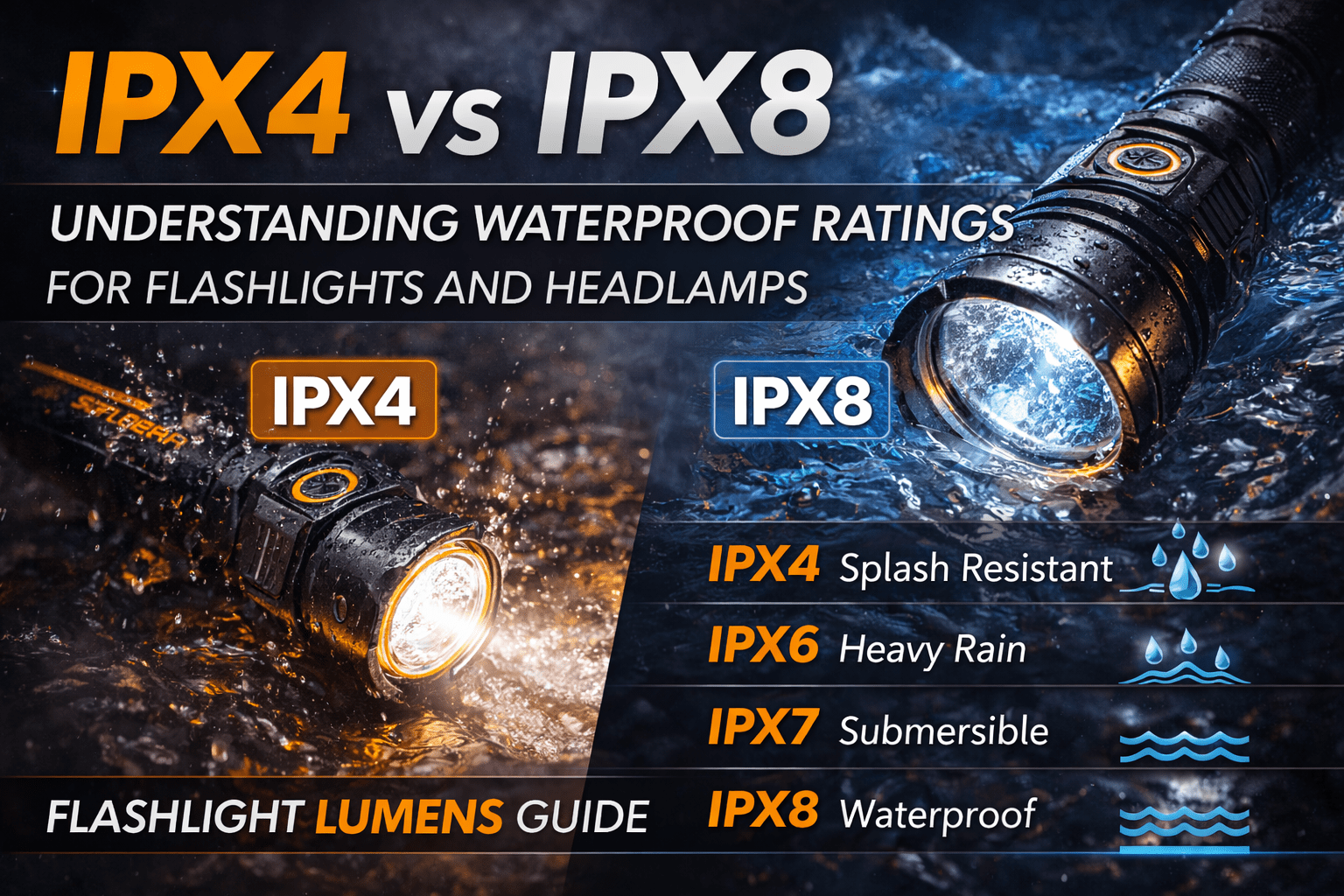
IPX4 – Splash Resistant
An IPX4 rating means the device can withstand splashes of water from any direction.
This rating protects against:
- light rain
- water splashes
- moisture exposure
IPX4 flashlights are suitable for:
- everyday use
- household emergencies
- casual outdoor activities
However, they are not designed to survive full immersion in water.
IPX6 – Heavy Rain Resistant
Flashlights rated IPX6 are tested to withstand powerful water jets.
This means they can handle:
- heavy rain
- strong water spray
- challenging weather conditions
These lights are well suited for outdoor environments where weather exposure is common.
IPX7 – Temporary Water Immersion
An IPX7 rating indicates the flashlight can survive temporary immersion in water.
During testing, the device is submerged in up to one meter of water for approximately 30 minutes.
This level of protection is useful for activities such as:
- kayaking
- boating
- fishing
- wet outdoor environments
If the flashlight is accidentally dropped in water, it should continue functioning normally.
IPX8 – Continuous Water Immersion
An IPX8 rating provides even higher protection. Devices with this rating are designed to withstand longer or deeper water immersion under conditions specified by the manufacturer.
IPX8 flashlights are often used in demanding environments, including:
- marine activities
- extreme weather conditions
- professional outdoor use
These lights offer some of the best water resistance available for handheld lighting tools.
Waterproof vs Water Resistant
Many products are described as water resistant, but this does not necessarily mean they are fully waterproof.
Water-resistant devices can handle limited moisture exposure, such as light rain or occasional splashes.
Waterproof devices, on the other hand, are designed to prevent water from entering critical components even during immersion.
The difference often comes down to engineering quality and sealing design. A well-built flashlight uses features like sealed electronics, precision threads, and protective gaskets to keep water out.
Why Waterproof Ratings Matter Outdoors
Outdoor environments are unpredictable, and lighting equipment must be able to withstand changing conditions.
Waterproof flashlights are particularly important for activities such as:
Camping
Unexpected rainstorms or wet conditions can occur at any time.
Fishing
Flashlights may be exposed to splashes or dropped near water.
Hiking
Trail conditions can include mud, rain, and moisture.
Search and Rescue
Emergency responders rely on lighting tools that must function reliably in extreme conditions.
Emergency Preparedness
In disaster scenarios, equipment must perform regardless of weather conditions.
A flashlight with the appropriate waterproof rating ensures it will continue working when visibility matters most.
Flashlight Construction and Sealing
Water resistance in flashlights depends heavily on engineering and build quality.
Several design elements help protect internal components from water.
O-Ring Seals
Rubber O-rings are commonly used at threaded joints to create watertight seals.
Threaded Aluminum Bodies
High-quality flashlights often use precision-machined aluminum housings that create tight, durable connections.
Sealed Switches
Switches are potential entry points for water, so many flashlights include sealed or protected switch mechanisms.
Tempered Glass Lenses
Durable lenses help protect the internal optics and electronics from both water and physical damage.
Together, these features help ensure that the flashlight remains functional in challenging environments.
Choosing the Right Waterproof Rating
Different activities require different levels of water protection. Here is a practical guideline to help match waterproof ratings with common use cases.
| Activity | Recommended IP Rating |
|---|---|
| Home emergency use | IPX4 |
| Camping | IPX4 – IPX6 |
| Hiking | IPX6 |
| Fishing | IPX7 |
| Professional outdoor work | IPX7 – IPX8 |
| Marine environments | IPX8 |
Selecting the appropriate rating helps ensure your flashlight performs reliably in the conditions you expect to encounter.
Maintenance Tips for Waterproof Flashlights
Even waterproof flashlights require proper maintenance to ensure long-term performance.
Here are a few simple tips:
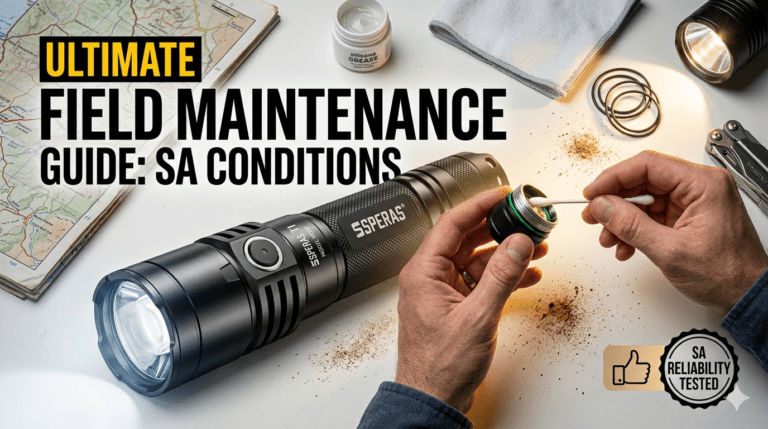
Inspect O-Rings Regularly
Check that rubber seals are intact and properly seated.
Keep Threads Clean
Dirt and debris can damage seals or prevent proper tightening.
Avoid Damaged Seals
If an O-ring becomes cracked or worn, it should be replaced.
Store Flashlights Properly
Avoid leaving flashlights in extremely hot or humid environments for long periods.
Routine care helps maintain the waterproof integrity of your lighting equipment.
Final Thoughts
Waterproof ratings provide a clear way to understand how well a flashlight or headlamp can withstand moisture and water exposure. By learning the difference between ratings such as IPX4, IPX7, and IPX8, users can choose lighting tools that match their environment and activity.
Whether you’re hiking through rainy terrain, fishing near water, or preparing for emergency situations, selecting a flashlight with the right level of protection ensures dependable performance when you need it most.
At Speras, our lighting equipment is designed to combine durability, precision engineering, and reliable waterproof protection, helping outdoor enthusiasts and professionals stay prepared in any conditions.