Flood vs Throw Flashlights: Understanding Beam Patterns and When to Use Them
When people compare flashlights, they often focus on lumens. While lumens measure total light output, they don’t tell the whole story about how a flashlight actually performs in the real world. Two flashlights with the same lumen rating can behave very differently depending on how the light is distributed.
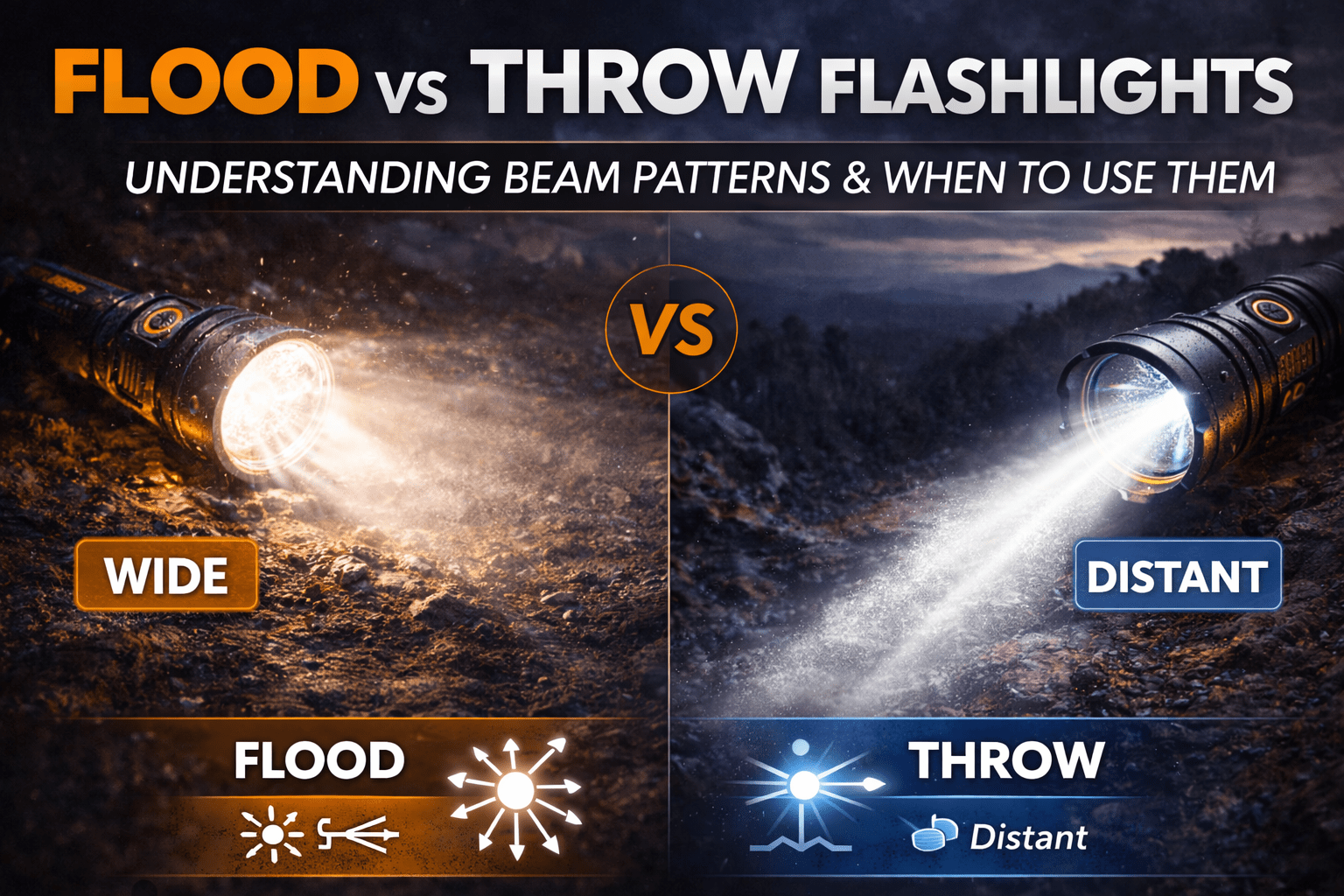
This difference comes down to beam pattern. Flashlights generally fall into two main categories: flood beams and throw beams. Understanding the difference between these beam types can help you choose the right lighting tool for your environment and activity.
In this guide, we’ll explain what flood and throw flashlights are, how beam intensity works, and when each type is most useful. If you’re looking for high-performance lighting tools, you can explore a range of professional options in the Speras LED Flashlights collection.
What Is a Flood Beam Flashlight?
A flood beam flashlight spreads light over a wide area rather than concentrating it into a tight beam. These lights prioritize coverage and close-range visibility, making them ideal for tasks that require broad illumination. (RangeSport America)
Flood beams typically have:
- Wide beam angles (often 60° or more)
- Even light distribution
- Minimal hotspot in the center
- Strong peripheral illumination
Because the light spreads out broadly, flood flashlights illuminate large areas but usually don’t reach very far into the distance.
Common Uses for Flood Flashlights
Flood beams are particularly useful for tasks that involve close-range visibility or situational awareness.
Typical scenarios include:
- Camping and setting up tents
- Walking around campsites
- Mechanical repairs
- Working in dark indoor environments
- Emergency household lighting
These flashlights make it easier to see everything around you rather than focusing on a single distant point.
What Is a Throw Flashlight?
A throw flashlight is designed to project light as far as possible. Instead of spreading the beam widely, the flashlight concentrates the light into a narrow, high-intensity hotspot. (M&F)
Throw flashlights usually feature:
- Narrow beam angles (often 10°–30°)
- A concentrated hotspot
- Minimal side spill
- High beam intensity (candela)
Because the light is tightly focused, throw flashlights can illuminate objects hundreds of meters away, depending on the model.
Common Uses for Throw Flashlights
Throw flashlights are often used in situations where distance visibility is critical.
Examples include:
- Search and rescue operations
- Security patrols
- Hunting and wildlife observation
- Marine navigation
- Long-distance outdoor navigation
These lights allow users to identify objects or hazards far ahead, which is essential in many outdoor and professional environments.
Lumens vs Candela: Why Beam Intensity Matters
To understand the difference between flood and throw flashlights, it helps to understand two key lighting measurements: lumens and candela.
Lumens
Lumens measure the total amount of visible light produced by a flashlight. This tells you how bright the flashlight is overall. (WUBEN)
However, lumens do not indicate how that light is focused.
Candela
Candela measures the intensity of the beam at its brightest point. A higher candela value means the light is more concentrated and can travel farther. (Infinity X1)
This is why a flashlight with moderate lumens but high candela can often project light farther than a higher-lumen flood light.
In simple terms:
- Lumens = total light output
- Candela = beam intensity and distance
Understanding both metrics is important when evaluating flashlight performance.
Real-World Beam Pattern Examples
Choosing between flood and throw flashlights depends largely on the environment and task.
Here is a practical comparison:
| Activity | Best Beam Type |
|---|---|
| Camping | Flood |
| Working on equipment | Flood |
| Hiking trails | Hybrid |
| Security patrol | Throw |
| Hunting | Throw |
| Search and rescue | Throw |
Flood lights help illuminate nearby surroundings, while throw lights help identify objects farther away.
Hybrid Beam Flashlights
Many modern flashlights combine elements of both beam types, creating a hybrid beam pattern.
Hybrid beams typically feature:
- A bright central hotspot for distance
- Wide peripheral spill for situational awareness
This design provides both long-distance visibility and close-range illumination, making it extremely versatile.
Hybrid flashlights are popular among:
- Outdoor adventurers
- Security professionals
- Emergency responders
- Everyday flashlight users
By balancing flood and throw characteristics, hybrid lights offer the best of both worlds.
How Flashlight Optics Create Different Beam Patterns
The shape of a flashlight beam is determined largely by its optical design.
Several engineering factors influence how the beam behaves.
Reflector Design
Deep reflectors concentrate light into narrow beams, increasing throw distance. Shallow reflectors produce wider flood patterns. (M&F)
LED Size
Smaller LED emitters often create tighter beams, while larger emitters spread light more widely.
Lens Systems
Some flashlights use specialized lenses to shape the beam pattern and improve efficiency.
These components work together to control how the light is focused and distributed.
Beam Distance and Realistic Expectations
Manufacturers often list a flashlight’s beam distance, which indicates how far the light can travel before fading to a specific brightness level.
Beam distance is typically calculated using standards that measure the distance at which illumination drops to approximately 0.25 lux, roughly equivalent to moonlight brightness. (TorchGuy)
While this measurement helps compare flashlights, real-world visibility often depends on factors such as:
- weather conditions
- terrain
- obstacles
- human eyesight
For most outdoor users, beam distances between 100 and 500 meters are more than sufficient.
Choosing the Right Beam Pattern
Selecting the right flashlight beam pattern depends on how you plan to use it.
Choose a Flood Beam If You Need:
- Wide illumination
- Close-range visibility
- Indoor or campsite lighting
- Equipment repairs
Choose a Throw Beam If You Need:
- Long-distance visibility
- Target identification
- Wildlife spotting
- Security monitoring
Choose a Hybrid Beam If You Need:
- Versatility
- Both distance and coverage
- General outdoor use
Many users find hybrid flashlights provide the most practical balance for everyday tasks.
Final Thoughts
When choosing a flashlight, brightness alone does not determine performance. The beam pattern—flood or throw—plays a crucial role in how useful the light will be in real-world situations.
Flood flashlights excel at illuminating nearby areas and providing situational awareness, while throw flashlights are designed to project light over long distances for outdoor and professional applications. Hybrid designs combine both approaches to deliver balanced performance.
Understanding these differences helps ensure you choose the right flashlight for your environment, whether you’re exploring the outdoors, performing nighttime work, or preparing for emergencies.
If you’re looking for lighting tools engineered for reliability and performance, you can explore the full range of LED Flashlights, designed for outdoor enthusiasts and professionals who rely on dependable illumination.