Best Flashlights for Camping and Outdoor Adventures
Spending time outdoors is one of the best ways to disconnect from daily stress and reconnect with nature. Whether you’re camping in the mountains, hiking through forests, or exploring remote trails, reliable lighting is one of the most important pieces of gear you can carry.
Once the sun sets, visibility becomes limited, and even simple tasks can become challenging without proper illumination. A dependable flashlight allows you to safely navigate trails, set up camp, prepare food, and handle unexpected situations during the night.
In this guide, we’ll explore what makes a great flashlight for camping and outdoor adventures, including the most important features to look for and how to choose the right lighting tools for your next trip. If you’re looking for reliable outdoor lighting designed for demanding conditions, explore the range of Speras LED Flashlights and Speras Headlamps built for performance and durability.
Why Campers Need Reliable Lighting
Camping often involves spending extended time in environments where natural light disappears quickly after sunset. Without proper lighting, even familiar outdoor areas can become difficult to navigate.
A good flashlight is essential for several common camping situations.
Navigating Campsites at Night
Moving around a campsite in the dark can be difficult and sometimes dangerous. Rocks, tree roots, and uneven ground can pose tripping hazards when visibility is limited.
A bright flashlight helps illuminate the terrain and allows campers to move safely around their campsite.
Setting Up Camp After Sunset
Sometimes campers arrive at their destination late in the day, leaving limited daylight for setting up tents and organizing gear.
A reliable flashlight provides the illumination needed to:
- pitch tents
- unpack gear
- organize supplies
- prepare sleeping areas
Emergency Situations
Outdoor environments can be unpredictable. Weather changes, delayed hikes, or unexpected challenges may require navigating in the dark.
Having a dependable flashlight ensures that you’re prepared to handle unexpected situations safely.
Important Features in a Camping Flashlight
Not all flashlights are equally suited for outdoor use. Certain features make a flashlight particularly useful during camping trips.
Brightness (Lumens)
Brightness is typically measured in lumens, which represent the total light output of a flashlight.
Camping flashlights usually perform well within the following brightness ranges:
| Activity | Recommended Lumens |
|---|---|
| Campsite tasks | 50–150 lumens |
| Walking around camp | 150–300 lumens |
| Hiking or trail navigation | 300–500 lumens |
| Long-distance visibility | 500+ lumens |
A flashlight with multiple brightness modes allows you to adjust illumination depending on the situation.
Runtime
Runtime is especially important during outdoor trips where charging options may be limited.
A good camping flashlight should provide several hours of illumination on moderate brightness levels.
Many modern flashlights include power-saving modes that extend battery life when maximum brightness isn’t necessary.
Beam Type
Flashlights produce different beam patterns depending on their design.
Two common beam types include:
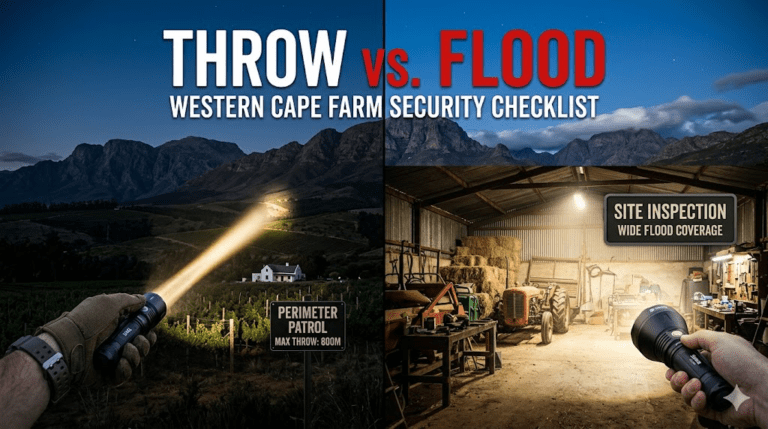
Flood Beam
Flood beams spread light across a wide area, making them ideal for campsite tasks and close-range visibility.
Spot Beam
Spot beams concentrate light into a narrower beam that travels farther. This is useful for trail navigation or spotting objects in the distance.
Some flashlights combine both beam styles to provide balanced illumination.
Water Resistance
Outdoor conditions often include rain, moisture, and unpredictable weather. Camping flashlights should include water resistance to ensure reliable operation.
Flashlights typically include an IP rating that indicates their protection against water and dust.
Common ratings include:
- IPX4 – splash resistant
- IPX6 – resistant to heavy rain
- IPX7 – waterproof for temporary immersion
Water-resistant flashlights ensure reliable performance even in wet environments.
Durability
Camping gear must withstand rough conditions, including drops, dirt, and rugged terrain.
High-quality flashlights often use aircraft-grade aluminum bodies, which provide strong impact resistance while remaining lightweight.
Durable construction protects internal components and ensures long-term reliability.
Flashlight vs Headlamp for Camping
Both flashlights and headlamps are useful during camping trips, and many campers carry both tools.
Flashlights
Handheld flashlights provide strong directional beams and are ideal for:
- scanning areas at a distance
- navigating trails
- exploring surroundings
Flashlights typically offer higher brightness and longer beam distance compared to headlamps.
Headlamps
Headlamps provide hands-free lighting, which is extremely helpful during campsite tasks.
Headlamps are ideal for:
- cooking meals
- setting up tents
- organizing gear
- reading maps
Because the light follows your line of sight, headlamps provide convenient illumination while keeping your hands free.
Many campers carry both a flashlight and a headlamp to cover different situations.
Rechargeable Flashlights for Outdoor Trips
Rechargeable flashlights have become increasingly popular for outdoor activities.
Most modern rechargeable flashlights use lithium-ion batteries, which provide strong performance and long runtime.
Advantages of rechargeable flashlights include:
- consistent brightness
- convenient USB charging
- reduced need for disposable batteries
- lower long-term operating costs
Rechargeable flashlights can often be charged using power banks, vehicle chargers, or portable solar chargers during extended trips.
This flexibility makes them well-suited for outdoor adventures.
How Bright Should a Camping Flashlight Be?
Choosing the right brightness level depends on how the flashlight will be used.
For general campsite tasks, extremely high brightness levels are usually unnecessary.
Moderate brightness provides comfortable illumination while conserving battery power.
Typical brightness needs include:
- 100 lumens for campsite tasks
- 200–300 lumens for walking around camp
- 400+ lumens for trail navigation
Many modern flashlights allow users to switch between brightness modes, giving flexibility depending on the environment.
Safety Benefits of Carrying a Good Flashlight
Reliable lighting improves safety during outdoor activities in several important ways.
Night Navigation
A strong flashlight helps illuminate trail markers, terrain features, and obstacles that may not be visible in low light.
This is especially important when hiking after sunset.
Wildlife Awareness
In some outdoor environments, wildlife may be active at night. A flashlight allows campers to maintain awareness of their surroundings.
Emergency Preparedness
Unexpected situations can arise during outdoor trips. A dependable flashlight ensures that you can safely navigate or signal for assistance if needed.
Reliable lighting is an essential part of any outdoor emergency kit.
Final Thoughts
Camping and outdoor adventures offer incredible experiences, but they also require proper preparation. Reliable lighting is one of the most important tools you can carry when exploring nature after dark.
A good camping flashlight should provide:
- sufficient brightness
- long battery runtime
- durable construction
- water resistance
- versatile beam patterns
By choosing the right flashlight, you can ensure safe and comfortable visibility during your outdoor adventures.
If you’re looking for dependable lighting equipment designed for rugged environments, explore the range of Speras LED Flashlights and Speras Headlamps built to deliver powerful performance and reliability wherever your adventures take you.