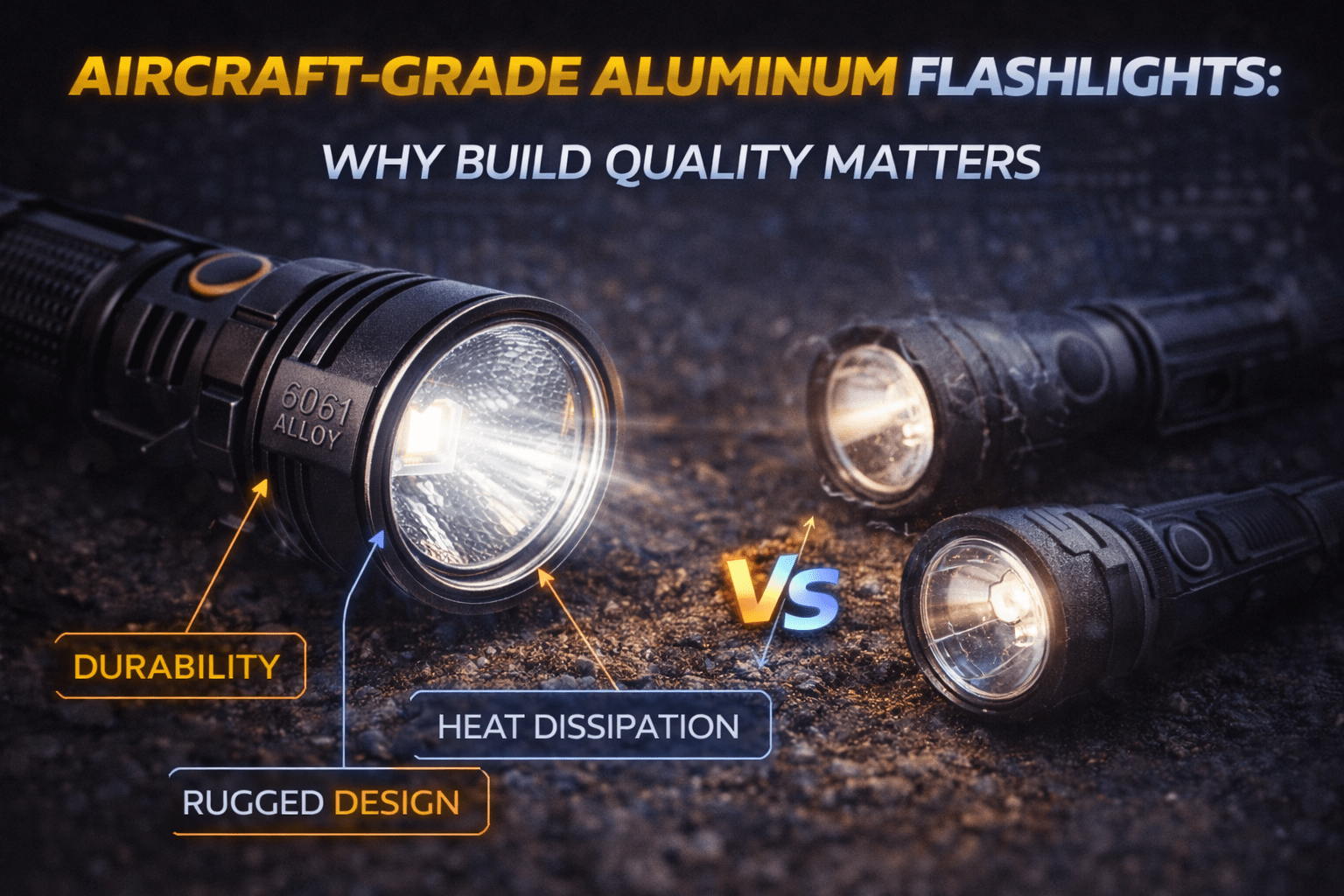
Aircraft-Grade Aluminum Flashlights: Why Build Quality Matters
When choosing a flashlight, many people focus on specifications like lumens, beam distance, or battery life. While these factors are important, one of the most critical aspects of flashlight performance is often overlooked: build quality and materials.
A flashlight designed for real-world use must withstand harsh environments, impacts, moisture, and extreme temperatures. That’s why many high-performance flashlights are constructed from aircraft-grade aluminum, a material known for its strength, durability, and ability to manage heat.
In this guide, we’ll explore why aircraft-grade aluminum is widely used in modern flashlights, how it improves durability and performance, and why material choice plays a major role in the reliability of professional lighting equipment. If you’re looking for rugged lighting tools engineered for demanding environments, explore the range of Speras LED Flashlights built with precision-machined aluminum construction.
What Is Aircraft-Grade Aluminum?
Aircraft-grade aluminum refers to high-strength aluminum alloys commonly used in aerospace and engineering applications. These alloys are designed to offer an excellent balance between strength, weight, and corrosion resistance.
One of the most commonly used alloys in high-performance flashlights is 6061-T6 aluminum. This material is widely used in aerospace, automotive components, and outdoor equipment due to its impressive mechanical properties.
Key characteristics of aircraft-grade aluminum include:
- high strength-to-weight ratio
- excellent corrosion resistance
- strong structural integrity
- good thermal conductivity
These properties make it an ideal material for equipment that needs to remain durable yet lightweight, such as flashlights designed for outdoor use.
Why Aluminum Is Used in Flashlights
Flashlights must perform reliably in a wide range of conditions, including rain, dust, cold temperatures, and rugged terrain. Aluminum offers several advantages that make it the preferred material for many high-quality flashlights.
Durability
Aluminum is significantly stronger than plastic while still remaining lightweight. This makes aluminum flashlights capable of surviving accidental drops, impacts, and rough handling.
Many outdoor enthusiasts rely on aluminum flashlights because they can withstand:
- drops onto hard surfaces
- vibration during hiking or travel
- daily wear and tear
A well-built aluminum flashlight can remain reliable for many years of regular use.
Corrosion Resistance
Outdoor environments often expose equipment to moisture, humidity, and salt air. Aluminum naturally forms a protective oxide layer that helps prevent corrosion.
This makes aluminum flashlights suitable for environments such as:
- coastal regions
- rainy conditions
- humid climates
- marine environments
With proper protective coatings, aluminum flashlights can maintain their structural integrity even when exposed to challenging conditions.
Impact Resistance
Plastic flashlights can crack or break when subjected to strong impacts. Aluminum housings, on the other hand, are much more resistant to damage.
This impact resistance is especially important for flashlights used in:
- outdoor adventures
- security patrols
- emergency preparedness kits
- professional applications
The rigid aluminum structure protects the internal electronics and LED emitter from damage.
Heat Dissipation and LED Performance
Modern flashlights can produce extremely high brightness levels, sometimes reaching thousands of lumens. This powerful output generates heat inside the flashlight head.
If heat builds up too quickly, it can reduce LED efficiency and shorten the lifespan of internal components.
One major advantage of aluminum is its excellent thermal conductivity. Aluminum efficiently transfers heat away from the LED emitter and spreads it across the flashlight body.
This heat dissipation provides several important benefits:
- improved LED performance
- reduced overheating risk
- longer component lifespan
- stable brightness output
By acting as a heat sink, the aluminum body helps maintain consistent flashlight performance during extended use.
Anodizing and Surface Protection
Most aluminum flashlights undergo a process called anodizing, which creates a protective coating on the metal surface.
Anodizing strengthens the outer layer of aluminum, improving resistance to scratches, wear, and corrosion.
Benefits of anodized aluminum include:
- improved surface hardness
- enhanced corrosion protection
- better scratch resistance
- attractive matte finish
Many high-quality flashlights use Type III hard-anodized finishes, which are particularly durable and resistant to abrasion.
This protective layer helps flashlights maintain their appearance and structural integrity even after years of heavy use.
Aluminum vs Plastic Flashlights
While plastic flashlights are often less expensive, they generally lack the durability and performance advantages offered by aluminum construction.
Here is a comparison between the two materials:
| Feature | Aluminum Flashlights | Plastic Flashlights |
|---|---|---|
| Durability | Very strong | More prone to cracking |
| Heat dissipation | Excellent | Poor |
| Impact resistance | High | Moderate |
| Weight | Lightweight | Lightweight |
| Longevity | Long-lasting | Shorter lifespan |
Plastic flashlights can still be suitable for basic household use, but aluminum construction is generally preferred for outdoor, professional, and high-performance lighting equipment.
Why Build Quality Matters in Outdoor Lighting
Flashlights used outdoors must be able to perform reliably under unpredictable conditions.
Durable materials ensure that flashlights continue working even when exposed to challenging environments.
Examples include:
Rain and Moisture
Water-resistant flashlights with aluminum bodies provide dependable performance in wet conditions.
Cold Temperatures
Aluminum maintains structural strength even in low temperatures, making it suitable for winter outdoor activities.
Dust and Dirt
Rugged aluminum construction helps protect internal components from environmental exposure.
Rough Terrain
Outdoor activities such as hiking, climbing, or camping often involve uneven terrain where equipment can be dropped or knocked against hard surfaces.
Strong materials help ensure that flashlights remain functional in these situations.
Engineering Matters in High-Performance Flashlights
Modern flashlights combine several carefully engineered components to deliver reliable performance.
These components include:
- LED emitter – generates light
- reflector or optics – shapes the beam
- driver electronics – regulates power
- battery system – provides energy
- aluminum housing – protects internal components and manages heat
Each part plays a role in ensuring the flashlight operates efficiently and safely.
The aluminum housing acts as both a protective structure and thermal management system, helping maintain consistent brightness and durability.
Final Thoughts
While brightness specifications often receive the most attention when comparing flashlights, build quality is just as important for long-term reliability and performance.
Aircraft-grade aluminum provides the strength, durability, and heat management needed for modern high-performance lighting equipment. Its lightweight yet rugged properties make it ideal for flashlights designed for outdoor adventures, professional use, and emergency situations.
By choosing a flashlight built from high-quality materials, users can ensure dependable illumination even in demanding environments.
If you’re looking for rugged lighting tools engineered with durable materials and precision design, explore the Speras LED Flashlights collection built to deliver powerful performance and long-lasting reliability.