Understanding Lumens, Beam Distance, and Battery Types: A Practical Guide for Flashlight Buyers
Flashlights have become essential tools for load-shedding, outdoor activities, security work and everyday use in South Africa. Yet many buyers still feel unsure about how to compare technical specs. Terms like lumens, beam distance, run-time and battery chemistry sound complex, but once you understand the basics, choosing the right torch becomes far easier. This guide breaks down the key features that influence real-world performance.
What Lumens Really Mean
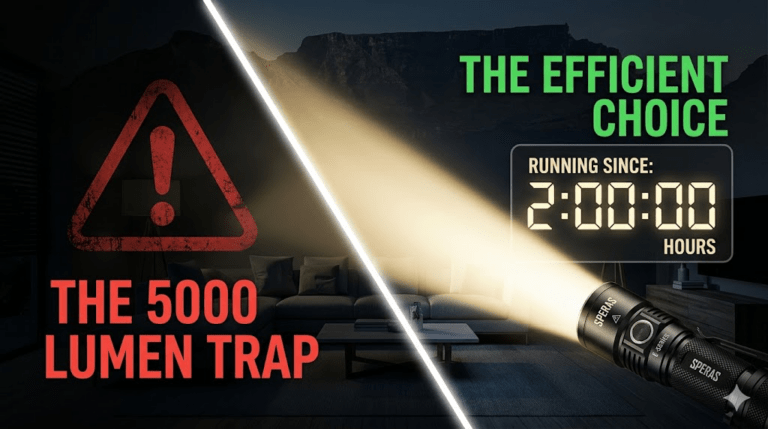
Lumens measure total light output. More lumens generally mean a brighter torch, but brightness alone does not guarantee usefulness. A high-lumen light can drain its battery quickly or produce too much glare for close-up tasks.
For household use, 200–500 lumens is usually sufficient.
For security and outdoor visibility, 1 000 lumens or more helps identify objects at distance.
The best approach is to choose brightness suited to your environment rather than chasing the highest number.
Beam Distance and Beam Pattern
Beam distance indicates how far the torch can project usable light. This matters for farm patrols, hiking at night and security work where long-range visibility is essential.
Beam pattern explains how the light spreads. A focused spot beam reaches far, making it ideal for open spaces. A wide flood beam is better for close-range tasks such as repairs, camping or navigating indoors during load-shedding.
Many modern flashlights offer both modes, giving users flexibility for different scenarios.
Why Battery Type Matters More Than People Think
Battery performance determines how long your flashlight runs and how quickly it recharges.
Rechargeable lithium-ion batteries offer the best balance of run-time, efficiency and power delivery. They are ideal for load-shedding and outdoor use because they hold charge well and recharge quickly.
Traditional AA or AAA batteries are convenient but provide shorter run-times and lower output, especially in high-performance models.
USB-C Charging and Power Efficiency
USB-C charging has become the preferred option for modern flashlights. It offers faster charging, simpler cable management and better long-term reliability. Many users appreciate the ability to charge their torch using power banks, laptops or vehicle ports during extended outages or travel.
Efficient power regulation inside the torch also ensures brightness stays stable rather than dropping sharply as the battery drains.
Run-Time and Heat Management
Run-time indicates how long the torch can operate on a single charge at different brightness levels. Strong run-time is especially important during long load-shedding periods or overnight outdoor use.
Heat management is equally important. High-power LEDs generate warmth, and good flashlights dissipate this heat through their aluminium bodies to protect the internal electronics. This extends lifespan and maintains consistent performance.
Durability and Build Quality
A flashlight’s construction influences how well it survives daily use. Aircraft-grade aluminium, reinforced lenses and proper water or dust resistance make a significant difference.
Durability matters for farm environments, coastal conditions, camping trips and general outdoor work where torches are exposed to weather or occasional drops.
Matching Specs to Real-World Use
The best flashlight is the one that suits your lifestyle rather than the one with the flashiest numbers.
For everyday home use, choose balanced brightness, long run-time and easy USB-C charging.
For farm security or outdoor exploration, prioritise beam distance, durability and higher output.
For toolkits, cars or emergency bags, compact models with moderate brightness and strong battery efficiency work best.
Choosing with Confidence
Once you understand lumens, beam patterns, battery types and durability, comparing models becomes simple. These technical features directly affect real-world usability, safety and convenience. A well-chosen flashlight should perform reliably through load-shedding, outdoor adventures and daily tasks.