Why Water Resistance, Impact Ratings, and Build Quality Matter When Choosing a Flashlight
A good flashlight is more than just brightness. Durability, construction and environmental resistance often determine whether a torch will last months or years. For South Africans who rely on flashlights during load-shedding, security patrols, outdoor adventures and farm work, build quality becomes one of the most important factors to consider. This guide breaks down why these elements matter and how they influence real-world performance.
Understanding Water Resistance and IP Ratings
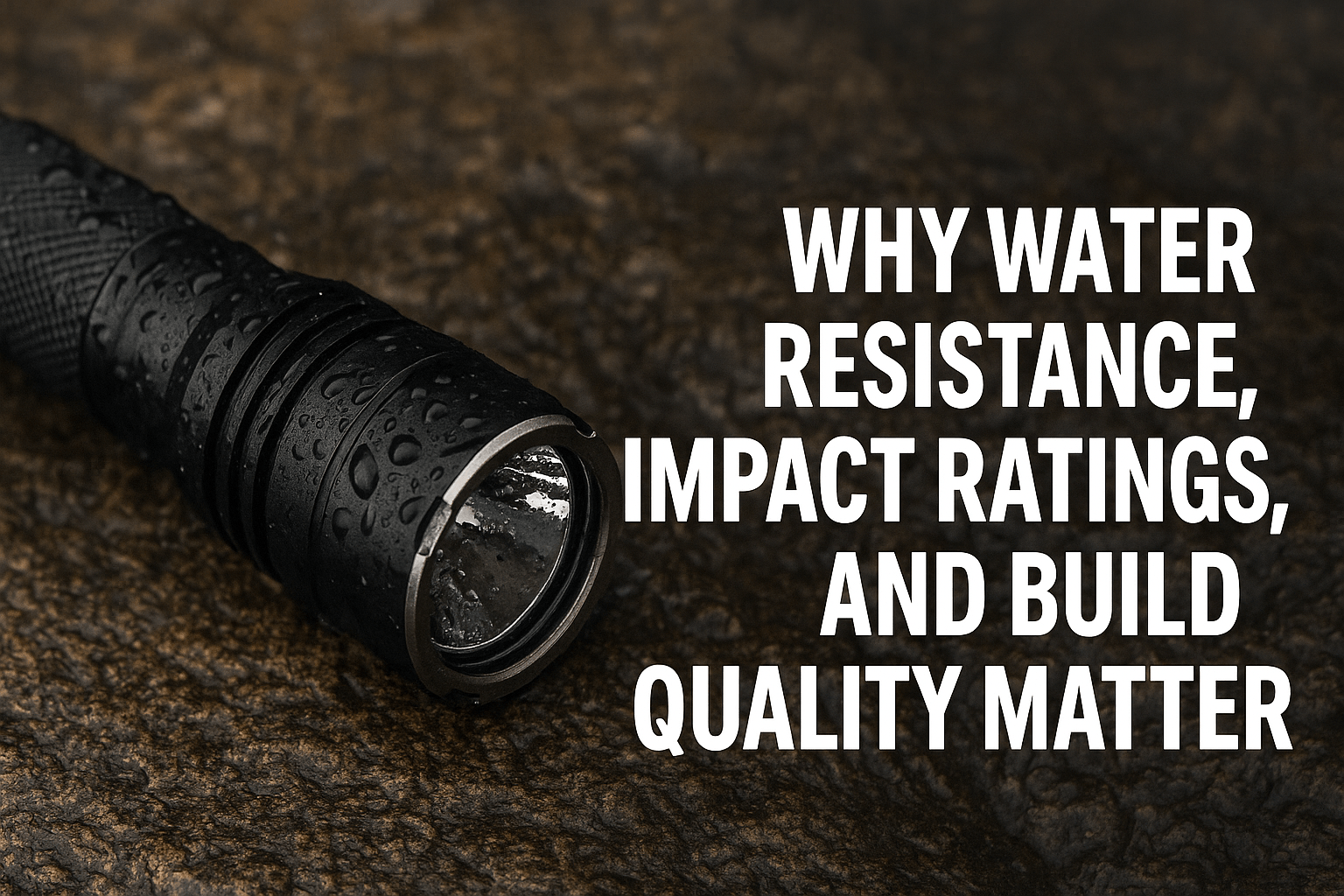
Water resistance protects a flashlight from rain, splashes and brief exposure to moisture. In South Africa, weather can shift quickly, and many users operate in damp or coastal environments where humidity and mist are common. An IPX4 rating protects against splashes, while IPX6 handles stronger water exposure such as heavy rain.
For anyone hiking, camping or working outdoors, proper water resistance prevents internal damage and keeps electronics functioning when conditions turn harsh.
Why Impact Resistance Is Essential
A flashlight that slips from your hand, drops onto concrete or falls from a vehicle should not break instantly. Impact resistance is a key safety and durability feature. Many quality torches are rated for drops from one to two metres, supported by strong aluminium bodies and reinforced lens designs.
This matters for farm work, security operations and general outdoor activity where torches experience rough handling and unpredictable terrain. A durable light saves money and ensures you are never left in the dark because of a minor accident.
Materials That Make a Real Difference
High-quality flashlights use aircraft-grade aluminium, stainless steel components and hardened lenses. These materials offer improved structural strength, better heat management and longer lifespan.
Cheaper plastics can warp, crack or fail under heat and pressure, especially during high-lumen output. Aluminium housings also help dissipate heat, improving both performance and LED longevity.
In short, good materials translate directly into safer operation and more reliable use.
Build Quality Beyond the Surface
The way a flashlight is assembled matters as much as the materials. Precision threading, tight seals, proper O-rings and well-machined components prevent dust, water and debris from entering the unit.
Buttons, switches and charging ports should feel secure and consistent. If a torch has loose parts, rattling, uneven surfaces or weak seals, it is likely to fail under stress. Attention to detail during manufacturing is a strong indicator of overall durability.
Why Reliability Matters More Than Brightness
Brightness often dominates marketing claims, but it is meaningless if the torch cannot survive basic daily use. South Africans need flashlights that perform in unpredictable and often demanding environments: night patrols, load-shedding, outdoor conditions, dusty roads, rainy seasons and emergency situations.
Durability ensures your torch works when you need it most, not only when conditions are perfect.
Choosing a Flashlight Built to Last
When selecting a flashlight, consider water resistance, impact ratings, materials and overall build quality alongside brightness and battery life. A well-built torch will handle harsh environments, survive accidental drops and deliver consistent performance across years of use.
Investing in quality is not just about longevity — it is about safety, convenience and peace of mind.