Tactical EDC: Why Every South African Commuter Needs a Small-Form Flashlight
The South African commute is uniquely volatile. Between rolling grid failures, unlit metropolitan corridors, and the ever-present reality of opportunistic crime, situational awareness is not just a buzzword—it is a daily operational requirement.
Yet, when assessing the personal readiness of the average commuter, a critical vulnerability consistently emerges: the reliance on a smartphone for illumination. In the Everyday Carry (EDC) community, we understand that light is not merely a convenience; it is a primary, non-lethal tool for environmental control. Here is why upgrading to a dedicated, small-form tactical flashlight is a non-negotiable component of your daily loadout.
1. The Smartphone Fallacy and EDC Philosophy
The belief that the LED on the back of your smartphone is a sufficient defensive tool is a dangerous miscalculation. Relying on your phone in a high-stress, low-light scenario introduces multiple points of failure:
- Comms Compromise: Your phone is your lifeline to emergency services and your family. Using it as a torch actively drains its battery precisely when you might need it most.
- Ergonomic Failure: Smartphones are sleek, slippery panes of glass. Deploying one as a searchlight under adrenal stress vastly increases the risk of dropping it—leaving you simultaneously blind and without communication.
- Zero Tactical Utility: A phone LED produces a weak, diffused flood of light. It has no “throw” (distance) and cannot blind an aggressor.
A dedicated EDC flashlight acts as your first line of defence. It allows you to command your visual space, identify threats early, and keep your primary communication device safely secured in your pocket.
2. Urban Safety and Threat Identification
In a tactical context, light is a weapon. The core objective of a defensive flashlight is the rapid deployment of a “photonic barrier.”
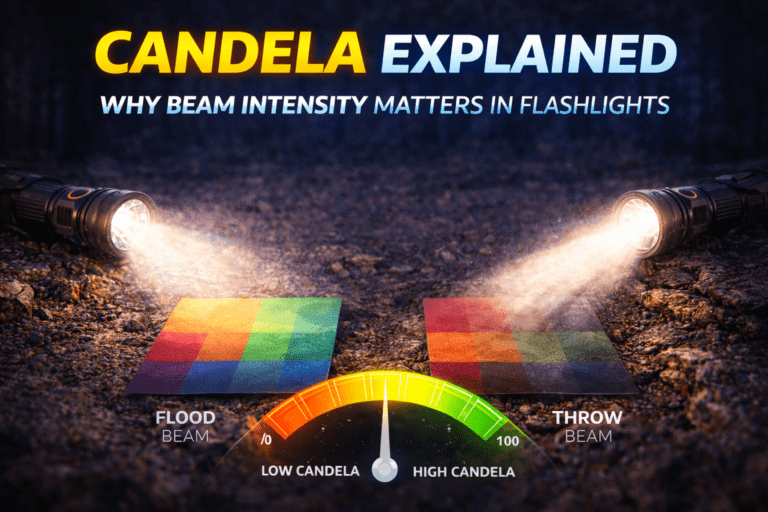
When you punch a concentrated beam of high-candela light (the intensity of the beam, rather than just the total lumen output) into an approaching threat’s eyes, you trigger an involuntary physiological response. The pupil constricts violently, and the individual is momentarily blinded.
More importantly, this disrupts the aggressor’s OODA Loop (Observe, Orient, Decide, Act). By stealing their vision and forcing them to re-orient, you buy yourself critical seconds to escape, draw a secondary tool, or seek cover.
To achieve this, your EDC torch must feature a tactical tail-cap switch with a “momentary-on” function. Under duress, fine motor skills degrade. You cannot afford to fumble with a side button or click through low and medium modes. A firm press of the thumb on the tail-cap must deliver instant, blinding turbo output or a disorienting strobe.
3. Vehicle Emergencies in Low-Light Corridors
Consider the reality of a tyre blowout on the N1 highway or a stalled engine on an unlit suburban road during Stage 6 load-shedding. Stepping out of your vehicle in complete darkness to inspect roadside debris, rocks, or a damaged wheel arch places you in extreme peril.
A small-form tactical torch excels in these environments. A critical feature to look for is a robust, two-way pocket clip. This allows the flashlight to be clipped securely to the peak of a baseball cap. Instantly, you have transitioned from a handheld device to a hands-free headlamp.
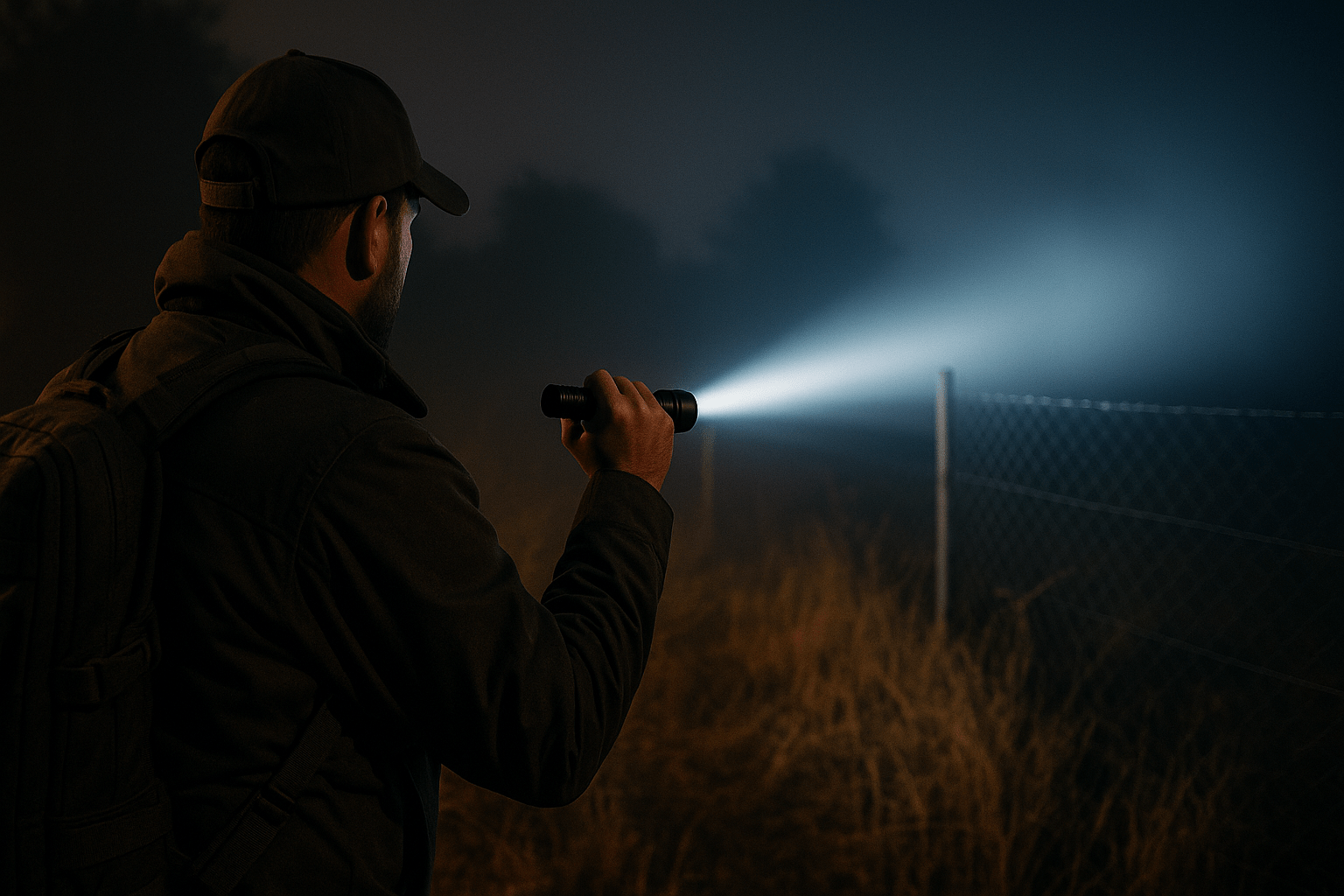
This hands-free capability is vital. It allows you to keep both hands engaged—whether you are operating a jack, inspecting an engine bay, or keeping your hands free for self-defence—while keeping a bright, focused hotspot exactly where you are looking, with enough spill to maintain peripheral awareness.
4. Hardware Spotlight: The Speras EST MIC
The market is flooded with generic torches, but commuting requires specific engineering. The Speras EST MIC (and similar compact tactical models) represents the ideal form factor for the South African urban environment.
- The Form Factor: It is small enough to disappear into a trouser pocket or clip onto a belt without causing discomfort when seated in a vehicle, yet large enough to maintain a firm, full-hand grip. The crenulated bezel adds a layer of physical strike capability if required.
- Candela vs. Lumens: While it boasts an impressive lumen count, its true value lies in its high candela output. It provides a tight, penetrating hotspot that can pierce through heavily tinted vehicle windows or illuminate down a dark alleyway without the light dissipating immediately.
- Dual-Switch UI: It separates tactical and administrative functions. The tail switch is strictly for instant, high-output tactical engagement. A separate side switch handles mode cycling (low, medium, high) for mundane tasks like finding dropped keys, ensuring you never accidentally blind yourself when you just need a reading light.
- Onboard Charging: The inclusion of a direct USB-C charging port on the battery or body is a game-changer for commuters. It allows the torch to be topped up directly from your vehicle’s centre console, ensuring it is always at 100% capacity.
- Environmental Hardiness: With an IP68 waterproof rating and impact resistance, it will survive being dropped on tarmac, submerged in a flooded gutter, or subjected to the extreme heat of a closed vehicle boot.
The Final Assessment
Your everyday carry should reflect the environment you operate in. Moving away from the smartphone fallacy and integrating a small-form, high-candela flashlight into your daily routine is one of the most cost-effective and tactically sound decisions you can make for your personal security. Own the night, dictate the terms of engagement, and never let the grid dictate your situational awareness.