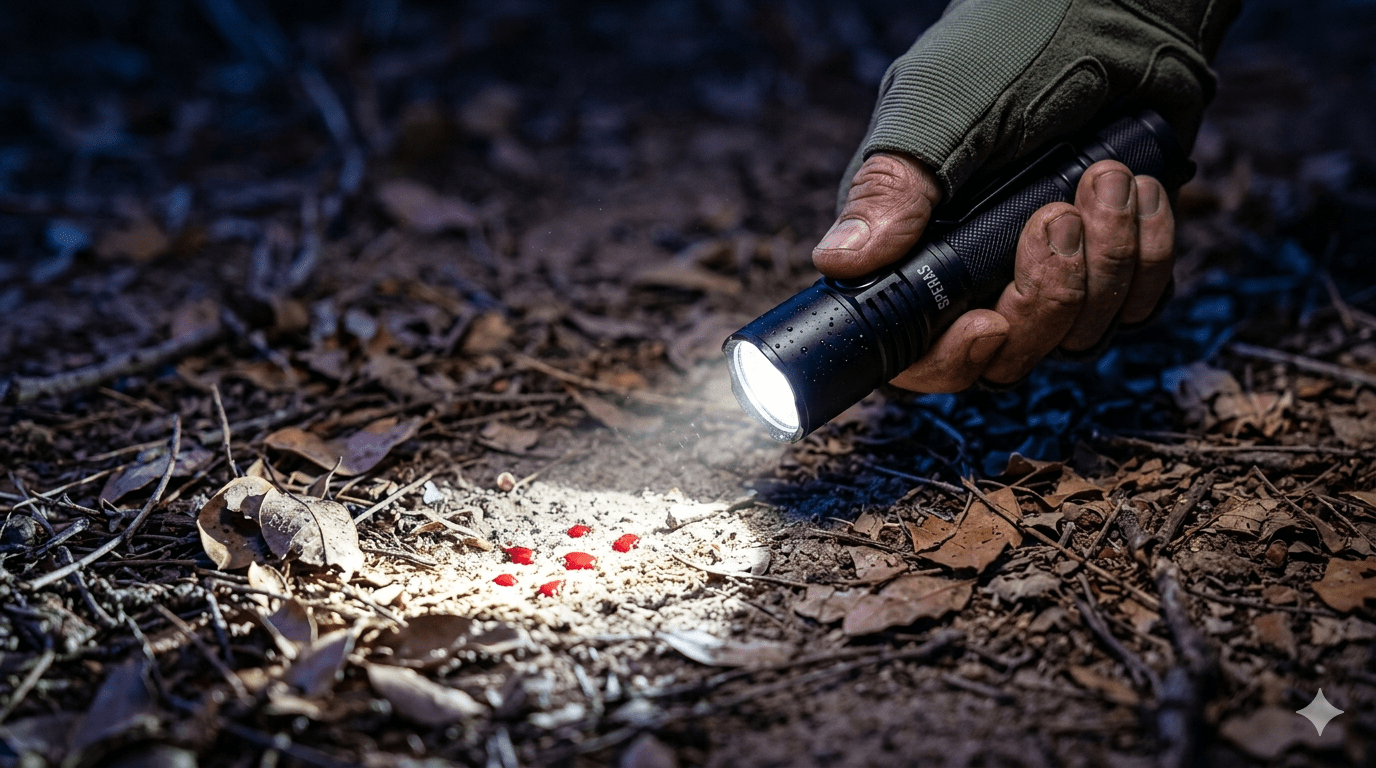
Hunting & Tracking: Choosing the Right Beam Profile and Filters
The sun has just dropped below the horizon, and the shadows are rapidly swallowing the thick bushveld. The adrenaline of the shot is fading, replaced by the heavy, silent responsibility of the track. You have a faint blood spoor on the dry earth, and the temperature is dropping.
Every Professional Hunter (PH) knows that the difference between an ethical, successful game recovery and a lost animal often comes down to the exact wavelength and profile of light you push into the brush. A standard household flashlight will wash out the environment, ruin your night vision, and hide the very tracks you are looking for.
To guarantee a clean recovery this biltong season, you need to understand the science behind purpose-built hunting flashlights in South Africa, and how to deploy the correct beam profiles and filters for the terrain.
The Geography of Light: Spill vs. Spot
The South African landscape is diverse, and your terrain dictates the type of beam profile you need. Carrying the wrong light profile is like bringing a shotgun to a long-range plains game hunt.
The Karoo (The Spot Beam)
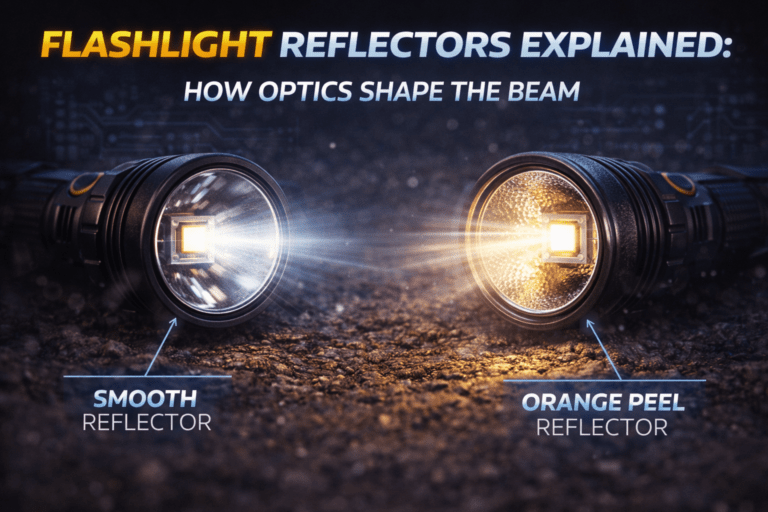
If you are operating in the wide-open flats of the Karoo or the Free State, you are dealing with vast distances. Here, you need a high-candela “spot” beam. A concentrated, tightly focused hotspot punches through atmospheric dust and allows you to identify targets or scan a distant kloof hundreds of meters away without the light diffusing into the open night air.
The Bushveld (The Spill Beam)
Tracking in thick acacia or Mopane woodland requires a completely different approach. If you fire a pure, high-intensity spot beam into thick brush, the light will hit the immediate branches and reflect straight back into your eyes, blinding you. In the bushveld, you need a balanced beam with generous “spill.” This wider angle of light allows you to read the ground for spoor right in front of your boots, while simultaneously providing enough peripheral illumination to spot a dangerous snake or an unseen buffalo lurking just off the game trail.
The Color Filter Debate: Green vs. Red Light for Hunting Bushveld
When navigating to a blind before dawn or scanning for nocturnal predators, blasting pure white light across the veld will instantly spook game and announce your presence. This is where the debate over green vs red light for hunting bushveld environments usually begins. Both have distinct tactical applications.
- Red Light (Stealth & Night Vision): The primary advantage of a red filter is that it preserves your natural night vision (rhodopsin in the eye). It allows you to read a map, check your GPS, or navigate a rocky path without your pupils constricting. Furthermore, many light-shy plains game species (like impala or kudu) have dichromatic vision and are far less sensitive to the red light spectrum. You can often scan a tree line with a red beam without causing the herd to bolt.
- Green Light (Contrast & Acuity): The human eye is highly receptive to the green light spectrum. A green filter offers superior visual acuity and contrast in the dark, cutting through light mist and fog better than other colors. It is the preferred choice for navigating extremely dense brush or for spotting dark-coated nocturnal targets, such as bushpig or black-backed jackal, as it illuminates the animal clearly without washing out the surrounding environment the way white light does.
The Essential Blood Tracking Torch
There is a critical rule when the tracking begins: the colored filters must come off.
Using a red or green light to follow a blood trail is a recipe for failure. A red light will cause the drops of blood to blend seamlessly into the brown leaves and dark soil, rendering them completely invisible.
When you are on the track, you need a dedicated blood tracking torch. This requires a pure white, High-CRI (Color Rendering Index) beam. While cheap LEDs make everything look flat and grey, a High-CRI LED emits light that closely mimics natural sunlight. This high color accuracy forces the oxygenated red blood to starkly “pop” against the muted earth tones of the African soil, allowing you to move swiftly and ethically on the spoor.
The Speras Hunting System: One Tool, Multiple Missions
Historically, a fully equipped tracker or PH had to carry three different flashlights to cover spotting, stealth navigation, and blood tracking.
The Speras ecosystem eliminates this bulk. We believe a hunter should carry one duty-grade, high-performance base light and adapt it to the mission. By starting with a high-candela, High-CRI white light, you possess the ultimate tracking tool. By utilizing our quick-attach, engineered red and green glass filters, you instantly convert that same light into a stealth navigation tool or a predator spotting rig.
Combined with silent remote pressure switches for rifle platforms and rugged holsters for your belt, you have a complete, adaptable system built for the absolute harshest conditions the continent can throw at you.
Equip yourself for an ethical, successful season. Build your complete tracking and hunting loadout today.
- Browse our duty-ready handhelds, mounts, and filters in the Speras Tactical and Hunting Flashlights range.
- Secure hands-free illumination for field dressing and camp tasks with Speras Headlamps.