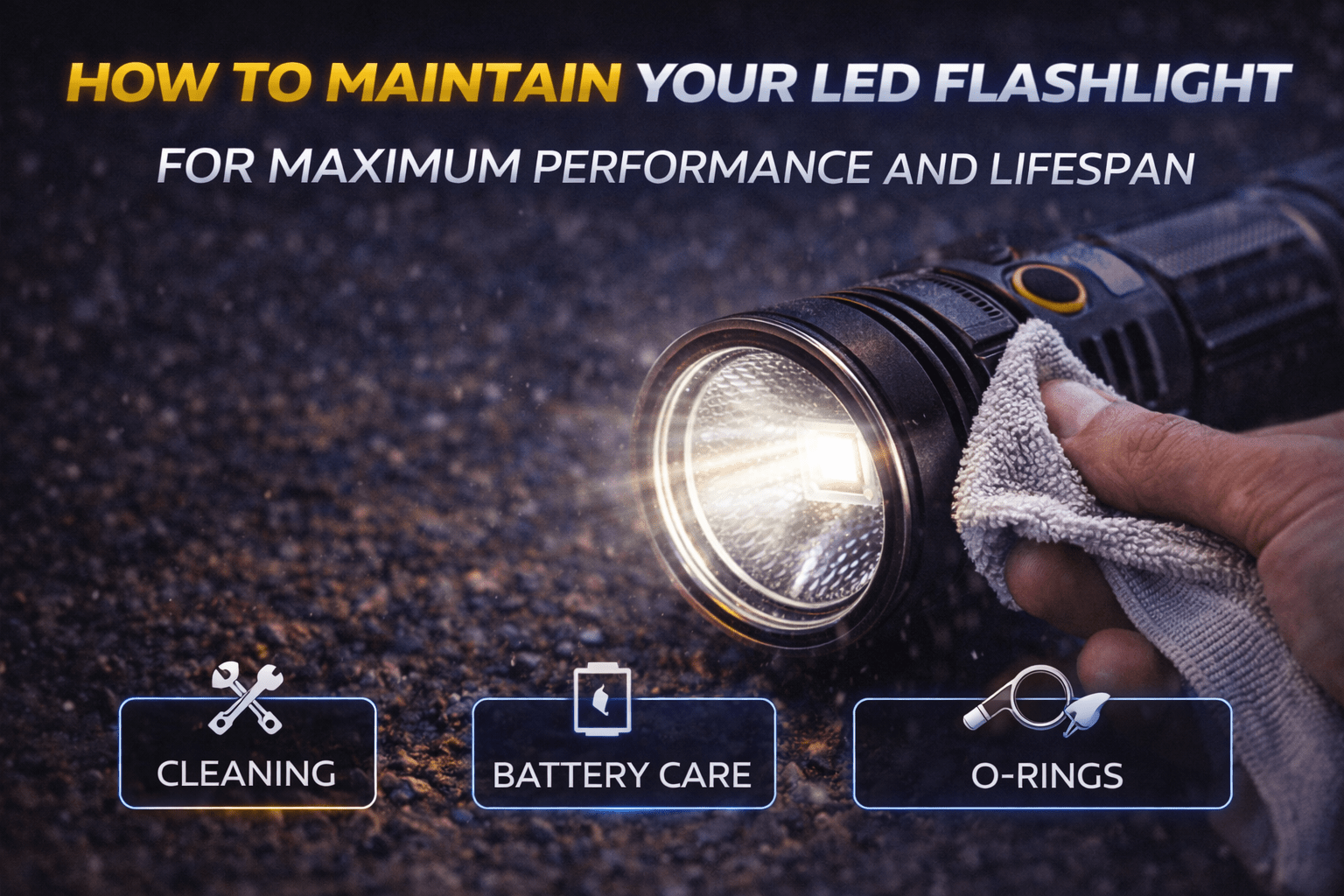
How to Maintain Your LED Flashlight for Maximum Performance and Lifespan
High-quality LED flashlights are built to deliver reliable illumination for years, even in demanding environments. Whether you use your flashlight for outdoor adventures, professional work, emergency preparedness, or everyday carry, proper maintenance helps ensure it continues performing at its best.
While modern flashlights are designed with durable materials, advanced electronics, and powerful LED emitters, they still benefit from basic care and routine inspection. Simple maintenance steps can improve reliability, extend battery life, and prevent performance issues over time.
In this guide, we’ll explain how to maintain your LED flashlight properly, including cleaning, battery care, and storage practices that help maximize its lifespan. If you’re looking for rugged lighting tools designed for long-term reliability, explore the range of Speras LED Flashlights engineered for performance in demanding environments.
Why Flashlight Maintenance Matters
Even though modern flashlights are built with robust components such as aircraft-grade aluminum housings and advanced electronics, they are still exposed to environmental factors during use.
Outdoor activities and daily use can expose flashlights to:
- dust and dirt
- moisture and humidity
- temperature changes
- vibration and impacts
Over time, these factors can affect performance if the flashlight is not properly maintained.
Routine maintenance helps ensure:
- consistent brightness output
- reliable operation when needed
- longer battery life
- protection of internal components
Fortunately, maintaining a flashlight requires only a few simple steps and minimal tools.
Cleaning the Flashlight Body and Lens
Dirt, dust, and debris can accumulate on the flashlight body, especially if it’s frequently used outdoors. Cleaning the exterior helps keep the flashlight functioning properly and prevents contaminants from entering sensitive areas.
Cleaning the Flashlight Body
To clean the body of the flashlight:
- Use a soft cloth or microfiber towel to wipe away dirt and dust.
- If necessary, lightly dampen the cloth with water to remove stubborn debris.
- Avoid using harsh chemicals or solvents that could damage the anodized finish.
Keeping the body clean also makes it easier to inspect the flashlight for wear or damage.
Cleaning the Lens
The lens is one of the most important parts of the flashlight because it protects the reflector and LED emitter while allowing light to pass through clearly.
To clean the lens safely:
- use a microfiber cloth
- gently remove fingerprints or dirt
- avoid abrasive materials that could scratch the surface
A clean lens ensures maximum light output and optimal beam clarity.
Battery Care and Storage
Batteries are the power source behind every flashlight, so proper battery care is essential for reliable performance.
Many modern flashlights use rechargeable lithium-ion batteries, which offer excellent energy density and long runtime.
Best Practices for Battery Care
To maintain healthy batteries:
- avoid completely draining lithium-ion batteries regularly
- recharge batteries before they become fully depleted
- use compatible chargers designed for the battery type
Keeping batteries within their recommended voltage range helps extend their lifespan.
Removing Batteries During Long-Term Storage
If you plan to store your flashlight for an extended period, it’s often best to remove the battery.
Leaving batteries inside unused devices for long periods may increase the risk of:
- slow discharge
- battery leakage
- reduced battery lifespan
Store batteries in a cool, dry place to maintain their performance.
O-Rings and Waterproof Seals
Many high-quality flashlights include O-rings, which are small rubber seals that protect internal components from water and dust.
These O-rings are usually located at threaded connection points such as:
- the battery tube
- the tail cap
- the flashlight head
O-rings play a crucial role in maintaining the flashlight’s water resistance rating.
Inspecting O-Rings
During routine maintenance, it’s a good idea to inspect O-rings for signs of:
- cracks
- dryness
- wear
If an O-ring becomes damaged, replacing it helps restore proper sealing.
Lubricating O-Rings
Applying a small amount of silicone grease to O-rings can help maintain flexibility and improve the seal.
Lubrication also makes it easier to tighten and loosen threaded parts without damaging the seal.
Avoid petroleum-based lubricants, as they may degrade rubber seals over time.
Thread Maintenance
Flashlights often include threaded connections that allow the battery tube, head, and tail cap to be assembled securely.
Keeping these threads clean and lubricated helps ensure smooth operation.
Cleaning Threads
If dirt or debris accumulates in the threads:
- wipe them clean using a dry cloth
- remove particles that may cause friction
Dirty threads can lead to poor electrical contact or difficulty tightening the flashlight components.
Lubricating Threads
Applying a small amount of silicone grease to the threads can:
- reduce friction
- prevent wear
- improve water resistance
Properly maintained threads help maintain reliable electrical connections inside the flashlight.
Proper Storage Practices
How you store your flashlight can also affect its long-term reliability.
When the flashlight is not in use, store it in a location that is:
- cool
- dry
- protected from direct sunlight
Avoid leaving flashlights in extremely hot environments such as cars during summer, as excessive heat can affect battery performance.
Keeping flashlights in a protective case or gear bag can also prevent accidental damage.
Common Flashlight Mistakes to Avoid
Many flashlight issues can be avoided by understanding a few common mistakes that reduce performance or cause damage.
Leaving Batteries Installed for Long Periods
If a flashlight will not be used for months, removing the battery can help prevent potential leakage or discharge issues.
Over-Tightening Components
Flashlight parts such as tail caps and battery tubes should be tightened securely but not excessively. Over-tightening may damage threads or compress O-rings too much.
Ignoring Dirt and Debris
Accumulated dirt can affect both mechanical parts and electrical contacts. Cleaning the flashlight periodically helps prevent these issues.
Using Incompatible Batteries
Always use batteries recommended by the flashlight manufacturer. Incorrect battery types may cause performance problems or safety risks.
Long-Term Reliability of Modern LED Flashlights
Modern LED flashlights are designed to provide long service life with minimal maintenance. High-quality components such as aluminum housings, durable optics, and advanced driver circuits contribute to long-term reliability.
LED emitters themselves can often last tens of thousands of hours, meaning the flashlight can remain functional for many years when properly maintained.
By following simple maintenance practices, users can ensure their flashlight remains dependable whenever it’s needed.
Final Thoughts
A well-maintained flashlight can deliver reliable illumination for years, making it an essential tool for outdoor activities, emergency situations, and everyday use.
Routine maintenance tasks such as cleaning the lens, inspecting O-rings, caring for batteries, and lubricating threads help keep the flashlight operating smoothly and efficiently.
These simple steps require very little time but can significantly improve performance and longevity.
If you’re looking for durable lighting tools designed for long-term reliability, explore the range of Speras LED Flashlights built with rugged materials, advanced electronics, and precision engineering for dependable performance in demanding environments.